



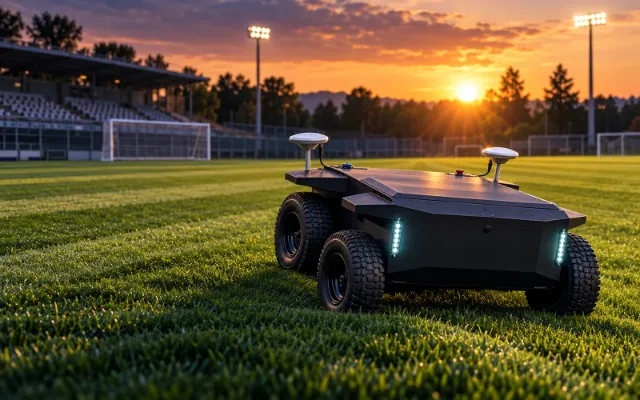
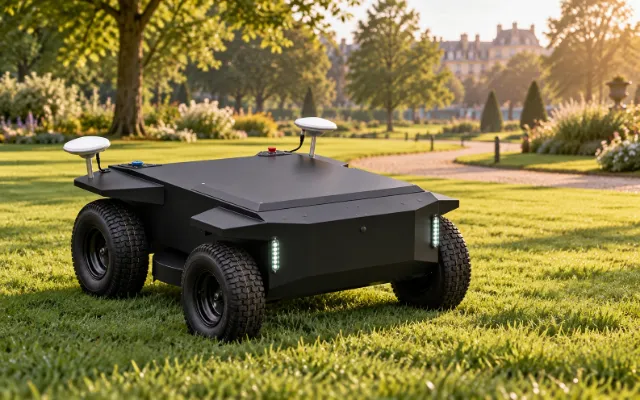
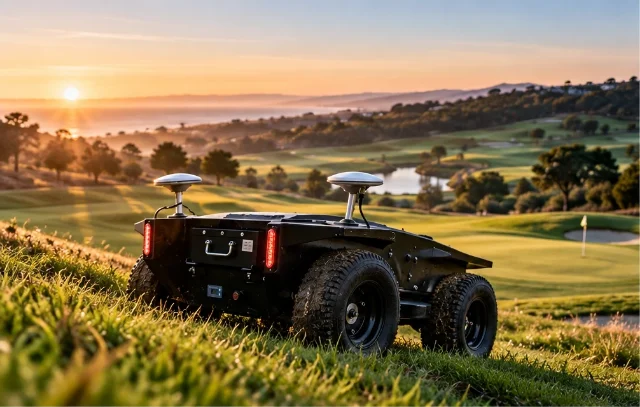






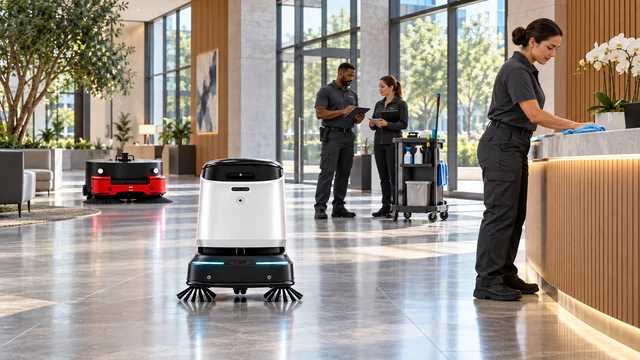

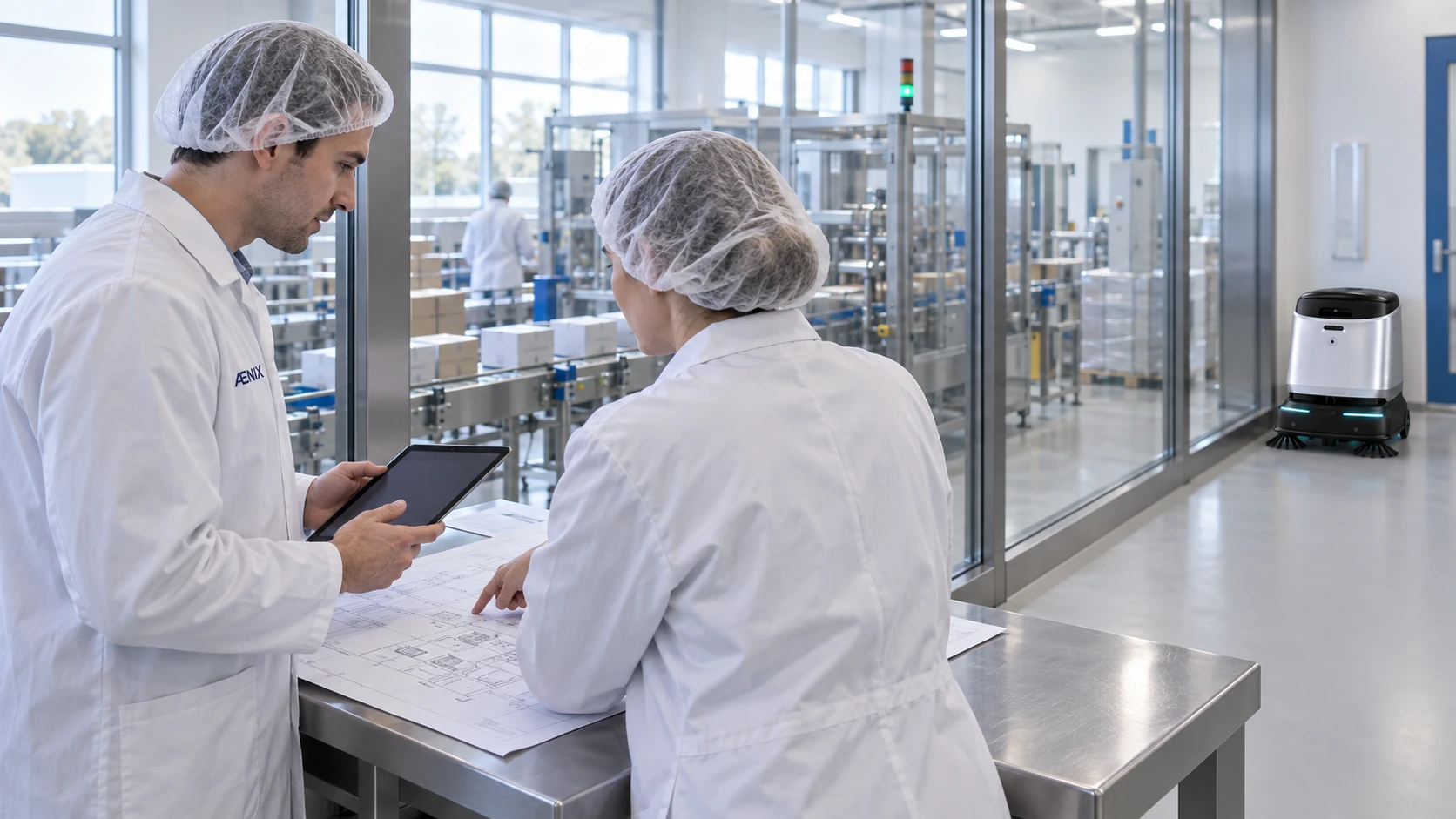
Robotics in the service of your food-processing site.
Floor cleaning and internal transport: explore automating repetitive tasks according to your zones, your flows and your operating requirements.
The uses shown here are starting points for assessment: every zone, every floor and every route is qualified with your teams before any recommendation.

Operations
One site. Different zones, different constraints.
At a food-processing site, two adjacent square metres do not follow the same rules. That is why the assessment starts by separating spaces, flows, tasks and working times.

Telling the zones apart
Circulation routes, packing areas, ancillary spaces and areas under specific constraints are not treated the same way.
Follow the movements
Teams, containers and packed products move according to rules specific to the site: these are recorded before any robotic route is set.
Define the scope
What could be automated is defined precisely — as is what stays with your teams.
Choose the times
The working periods are assessed according to the activity and the cleaning arrangements already in place.

Floor cleaning
Assessing robotic cleaning where it makes sense.
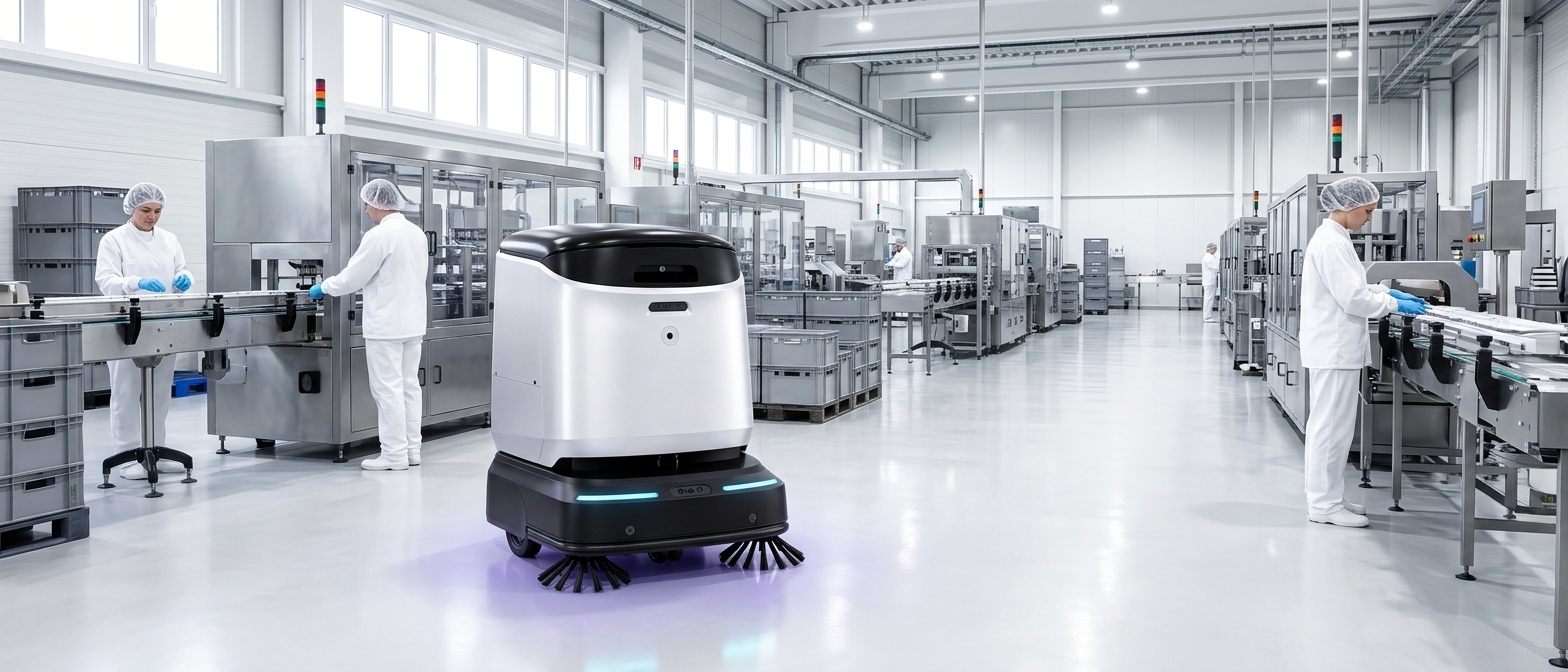
A robot performs a mechanical cleaning task, on a defined floor and in a defined zone. That scope is built with your production, quality and hygiene managers — it is not decided from a spec sheet.
What the assessment looks at
- Type and condition of the covering
- Joints, thresholds and drains
- Clearance widths
- Type of soiling
- Presence of water or grease
- Frequency of work
- The site’s methods and products
- Machine upkeep
- Permitted zones
- How it fits with your teams
Cleaning is not disinfecting. A robot carries out mechanical cleaning of the floor. It does not disinfect, does not eliminate bacteria or viruses, does not control allergens and does not remove the risk of cross-contamination. Your hygiene protocols remain defined and carried out by the site.
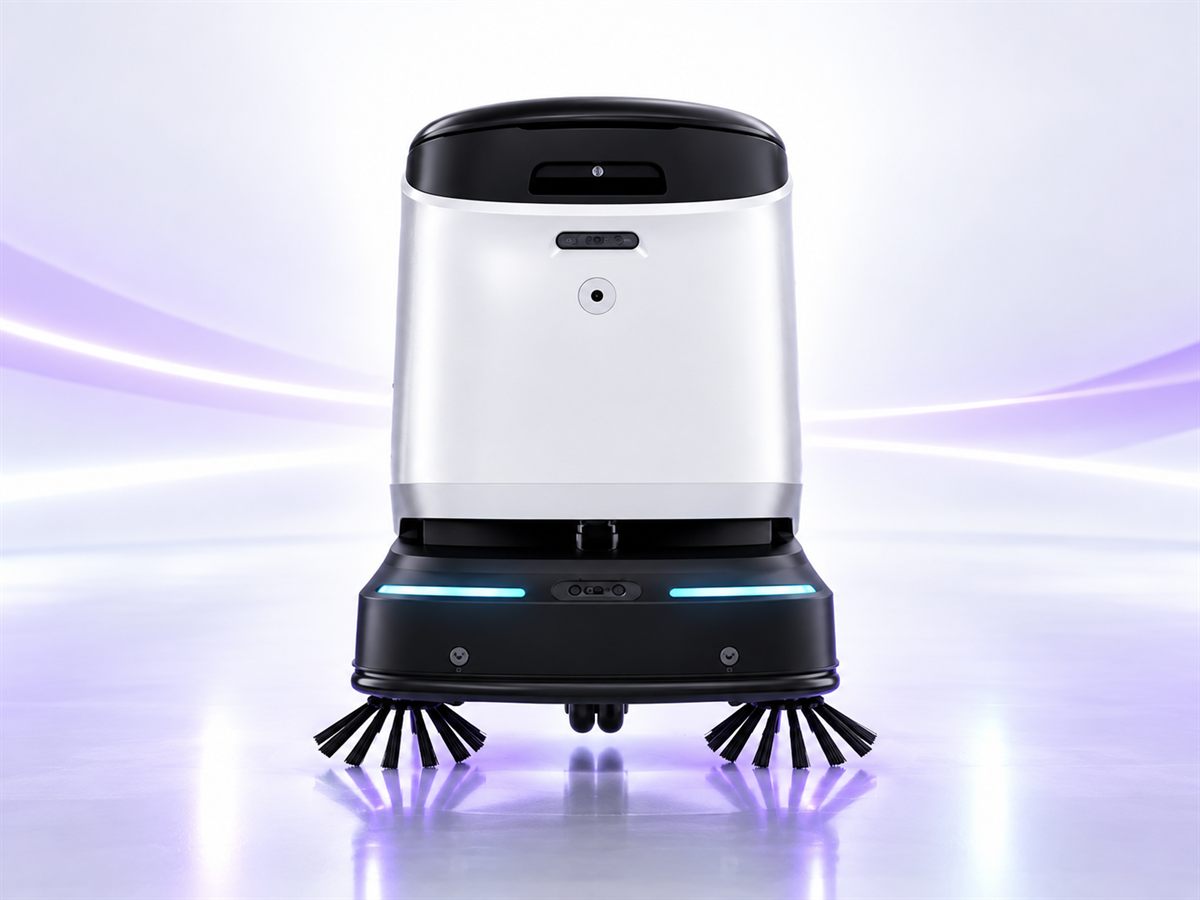
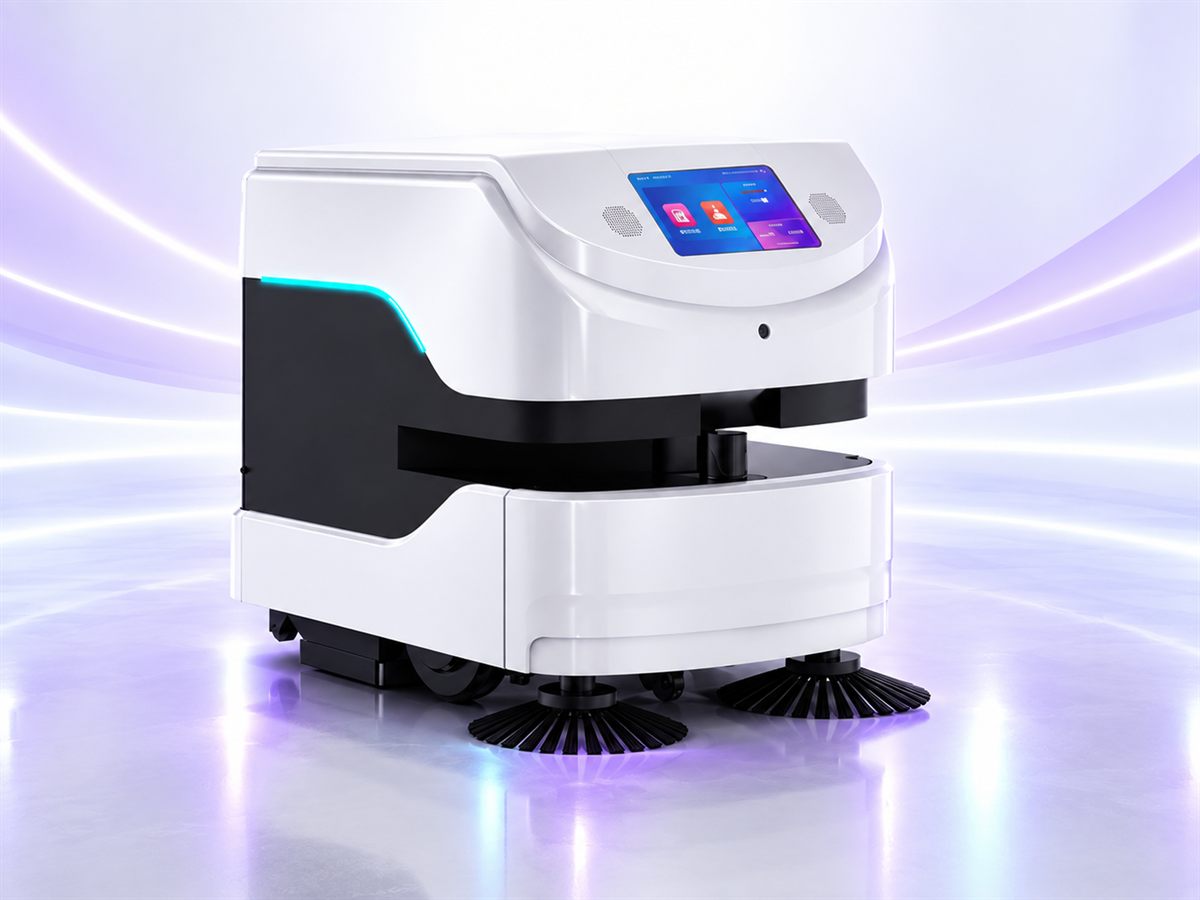
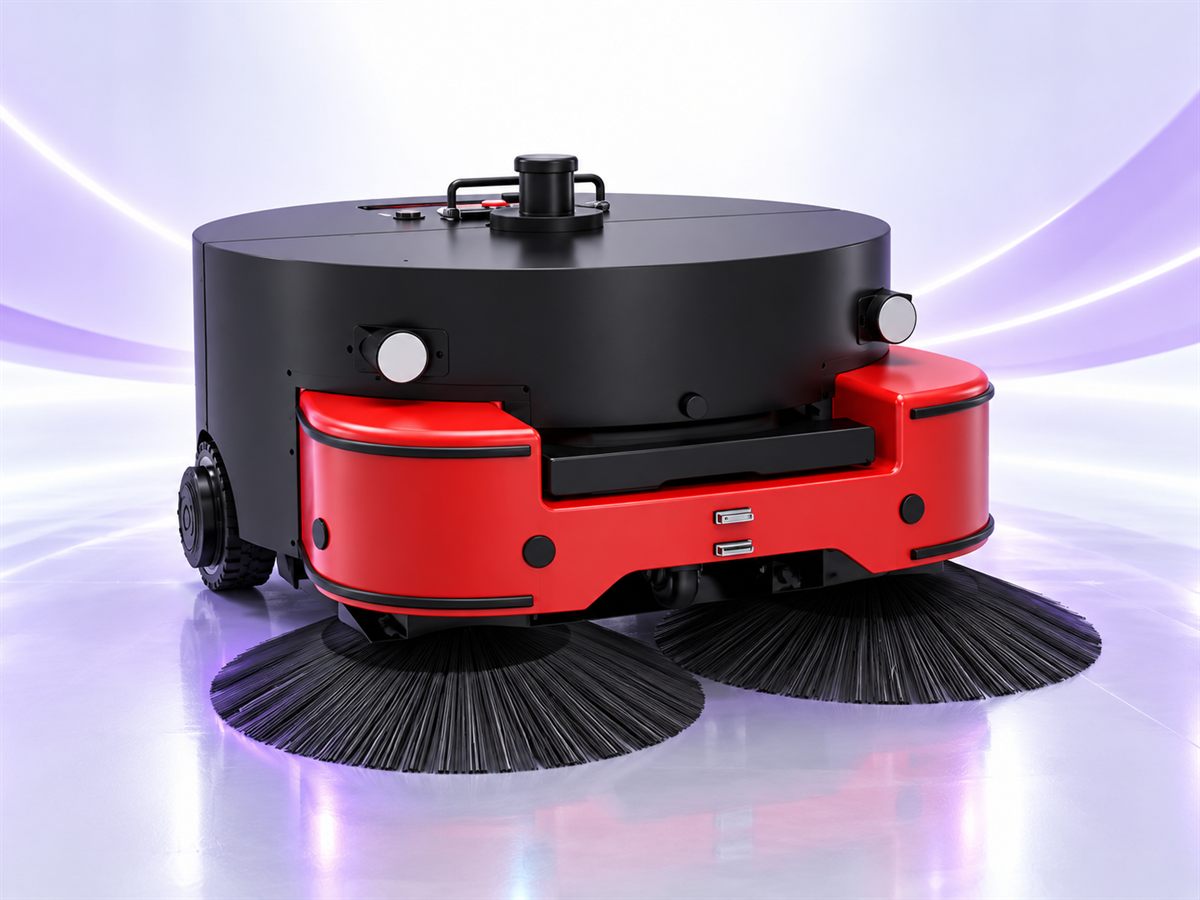
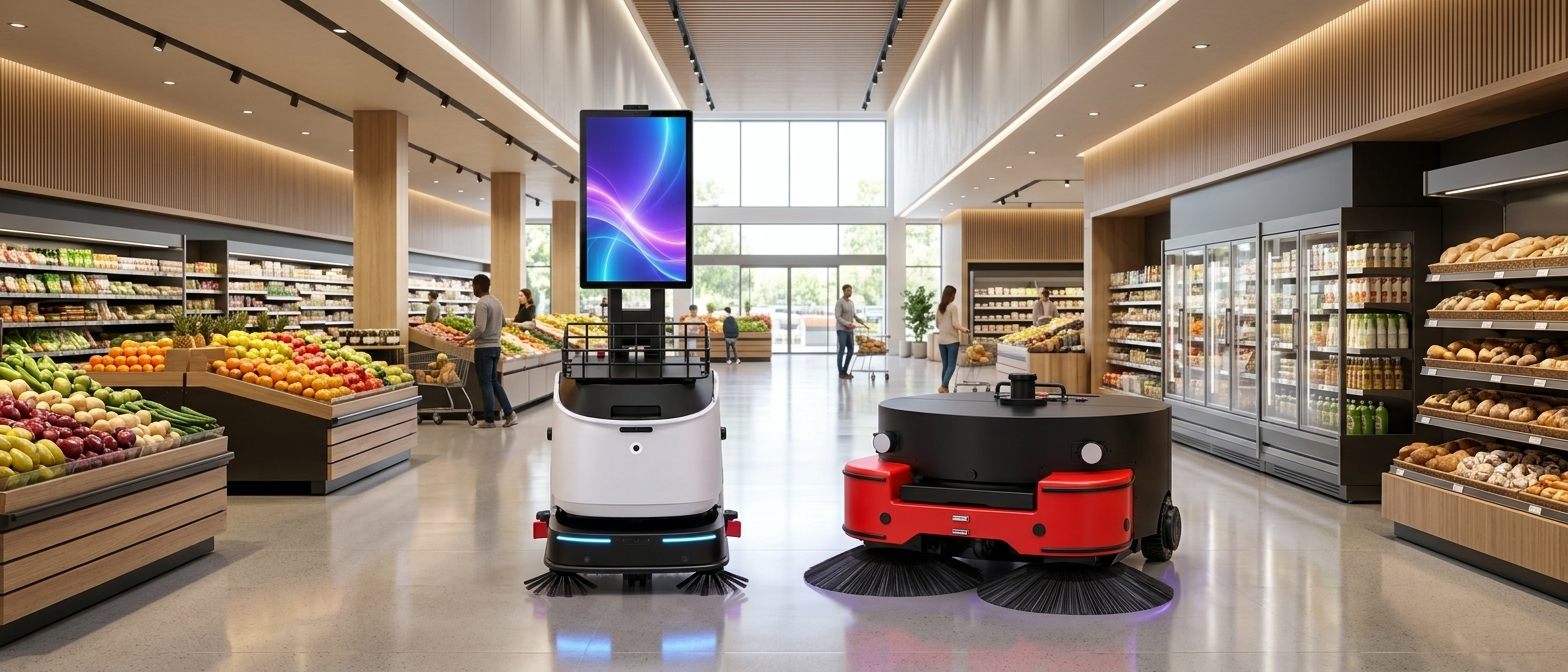
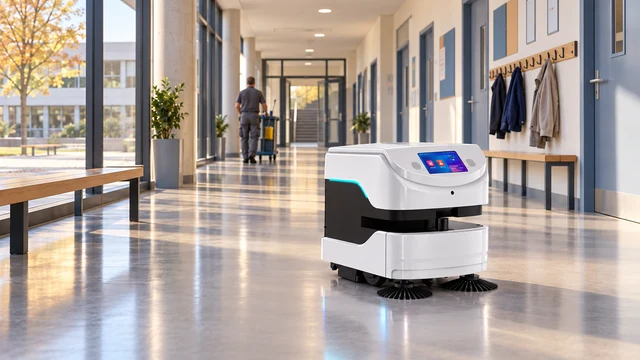
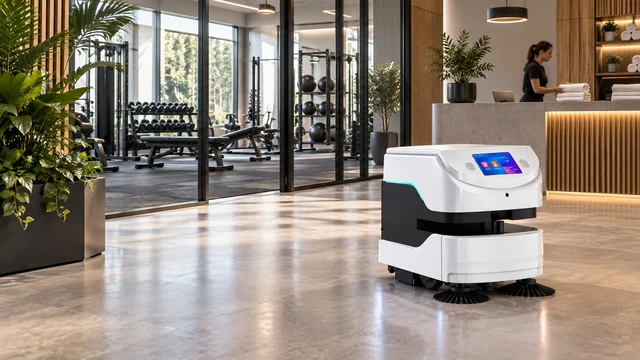
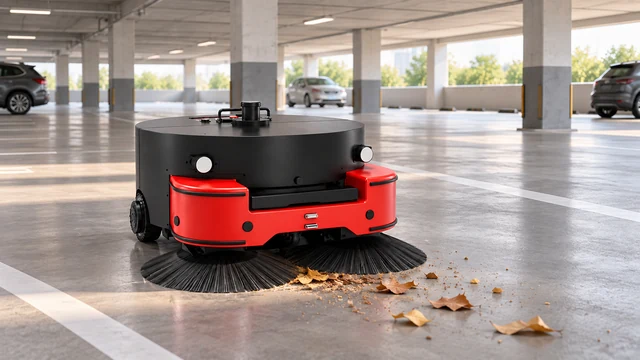
Depending on the tasks chosen, the assessment examines machines in the PURE range from their documented functions — dry sweeping or sweeping, scrubbing, vacuuming and dust handling — without presuming they suit a food area.

Internal transport
Identifying repetitive movements between defined points.
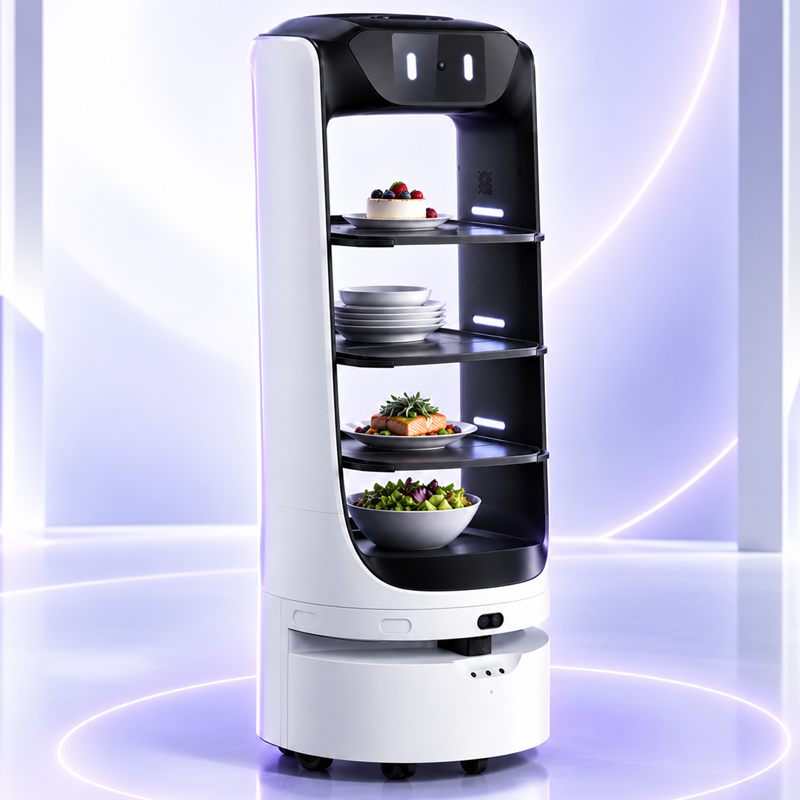
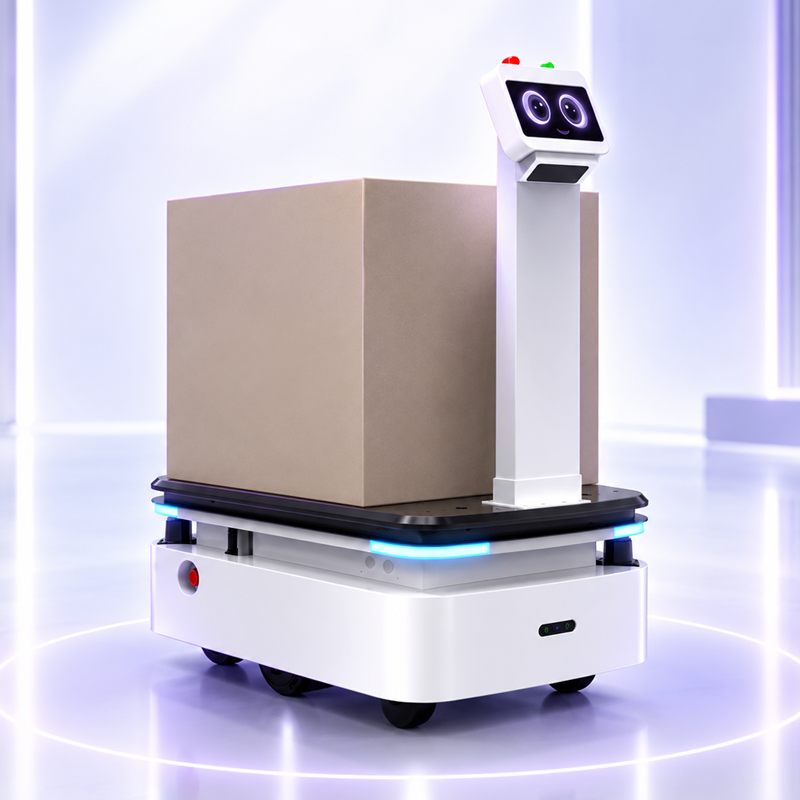
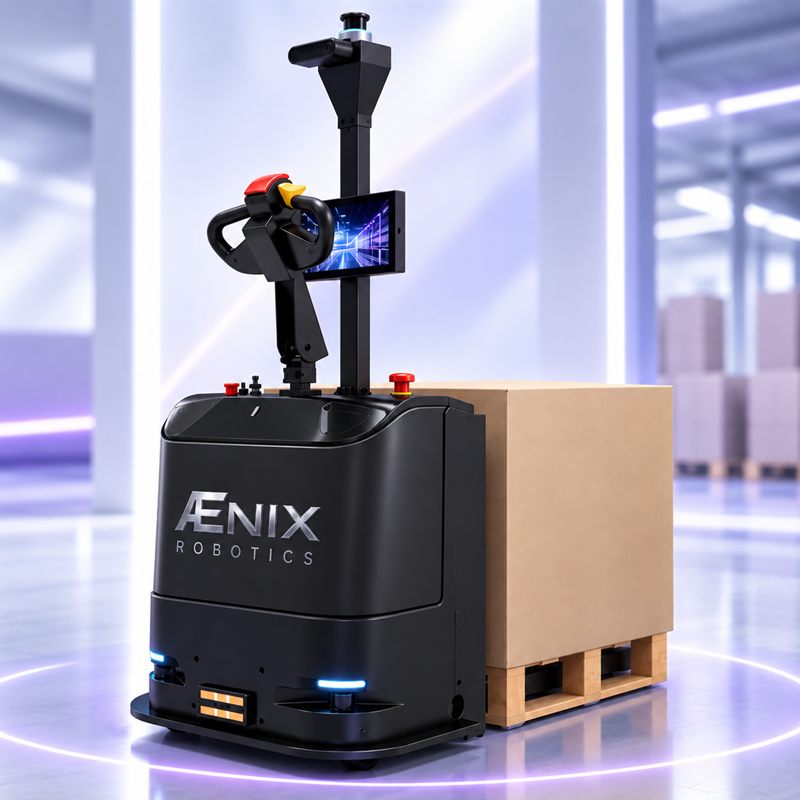
Moving supplies, shifting boxes, linking preparation to packing and then to storage: these runs come back every day. What remains is to check, run by run, what a machine can genuinely take on.
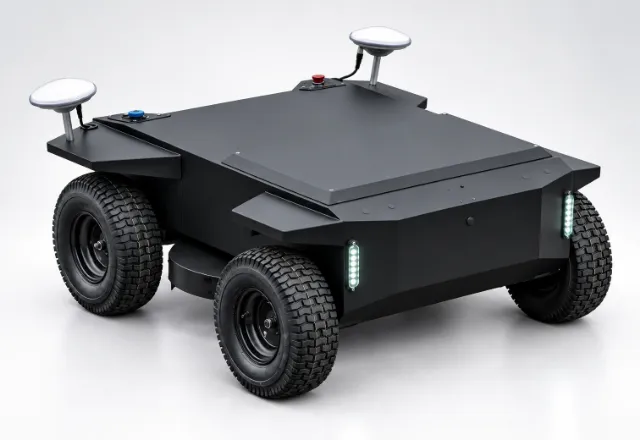
What this page does not claim: no direct contact with food, no transport of open products, no temperature control, no automatic loading, no door opening and no conveyor integration. The ÆNIX transport solutions — TITAN, SWIFT — are being added to the catalogue: their specifications and validated uses are presented during the assessment.
Circulation & zoning
The routes are defined with your teams.
The robot sets no rules: it applies your site’s. The questions below are settled with your production, quality, hygiene and maintenance managers.


Teams & organisation
Automation prepared with the people who run the site.
A well-chosen but poorly integrated machine ends up idle. That is why the organisation matters as much as the equipment.
The ÆNIX method
Every project starts with a site assessment.
ÆNIX Robotics is an integrator: we start from your tasks and your zones, then set them against the documented capabilities of the solutions.
Analysis
Tasks, floor areas, any loads, routes and site constraints.
Select
Comparing the needs with the documented capabilities of the solutions — or finding that none suits the zone in question.
Trial and deploy
Preparing a scope, arranging a trial where it makes sense, defining the operating conditions.
Train and support
Training the teams and setting out the support arrangements according to the offer chosen.
Financial assessment
Evaluating one specific task before widening the project.
One task, one zone, real data: that is the only serious basis for talking figures. Without your data, no estimate is worth anything.
The assessment may conclude that a zone is not suited to automation, or that the site has to be adapted first.
Deployment
Starting with a defined scope.
One zone, one task, written conditions: the first scope is there to check what genuinely works at your site before going further.
A solution that works in one zone does not transfer as it is to another: every new zone, like every new site, gets its own assessment.
Financing
Let’s discuss how to acquire it.
Different purchase or financing arrangements can be explored depending on the project and the number of machines. The terms are presented with the proposal, after the site assessment.
Discuss it with an expertCan a cleaning robot be used at a food-processing site?
It depends on the zone, the floor and the task in question. A robot performs mechanical cleaning over a scope defined with you. So the question is not “a food-processing site” in general, but “this circulation route, this covering, this soiling, at this time”.
Which zones can be assessed?
Typically circulation routes, certain packing areas, ancillary spaces and storage areas for packed products. No zone is presented as accessible by default: your internal rules determine what can be considered.
Does a cleaning robot also disinfect?
No. Mechanical cleaning and disinfection are two different operations. We claim no elimination of bacteria or viruses, no allergen control and no removal of cross-contamination. The hygiene protocols remain those of your site.
How are the site’s hygiene procedures taken into account?
By taking them as the framework. The assessment is carried out with your quality and hygiene managers: permitted zones, working times, machine upkeep and how it fits with the operations carried out by your teams. ÆNIX neither attests nor certifies your site’s compliance.
Which soiling and which floors can be handled?
That is qualified on site: covering, joints, thresholds, drains, any water or grease. We present no machine as able to handle every kind of soiling or to work on every floor.
Which internal transport runs can be considered?
Repetitive runs between defined points: supplies, boxes, closed containers, packed products, links between preparation, packing and storage. Every run is assessed according to the load, the distance, the zones crossed and the traffic rules.
Can packed products or closed containers be moved?
That is the framework in which these needs are assessed. No direct contact with food, no transport of open products and no temperature control, however, is claimed here: they would require specific documentation.
Can these robots be used in a cold or damp area?
The answer depends on the documented limits of the model considered and on the actual conditions in the zone. We claim no operating temperature, no ingress protection rating and no resistance to hose-down washing unless the model’s documentation states it.
How is the machine maintained in this environment?
According to the operations set out in its documentation, and according to your site’s rules. Upkeep is part of the scope defined at deployment: who does it, how often and in which zone.
Can a solution be trialled before deployment?
Where it is worthwhile and possible, a trial can be arranged over a limited scope, subject to the site’s eligibility and the availability of the solution. Tell us about the task you have in mind.
What determines the cost of the project?
The solution chosen and the number of machines, the configuration, the deployment, the preparation required, the associated services (training, support, maintenance), the consumables, any site changes and how it is acquired or financed. Request a quote
Site assessment
Let’s look at what your site can automate.
Tell us about your tasks, your zones and your organisation. ÆNIX assesses the relevant uses and the conditions needed to put them in place.
- Business activity
- Task considered
- Zone concerned
- Floor area or route
- Floor type
- Load, if any
- Ambient conditions
- Hours
- Phone
- +33 5 33 04 12 27
- contact@aenix.fr
- Coverage
- Across France