










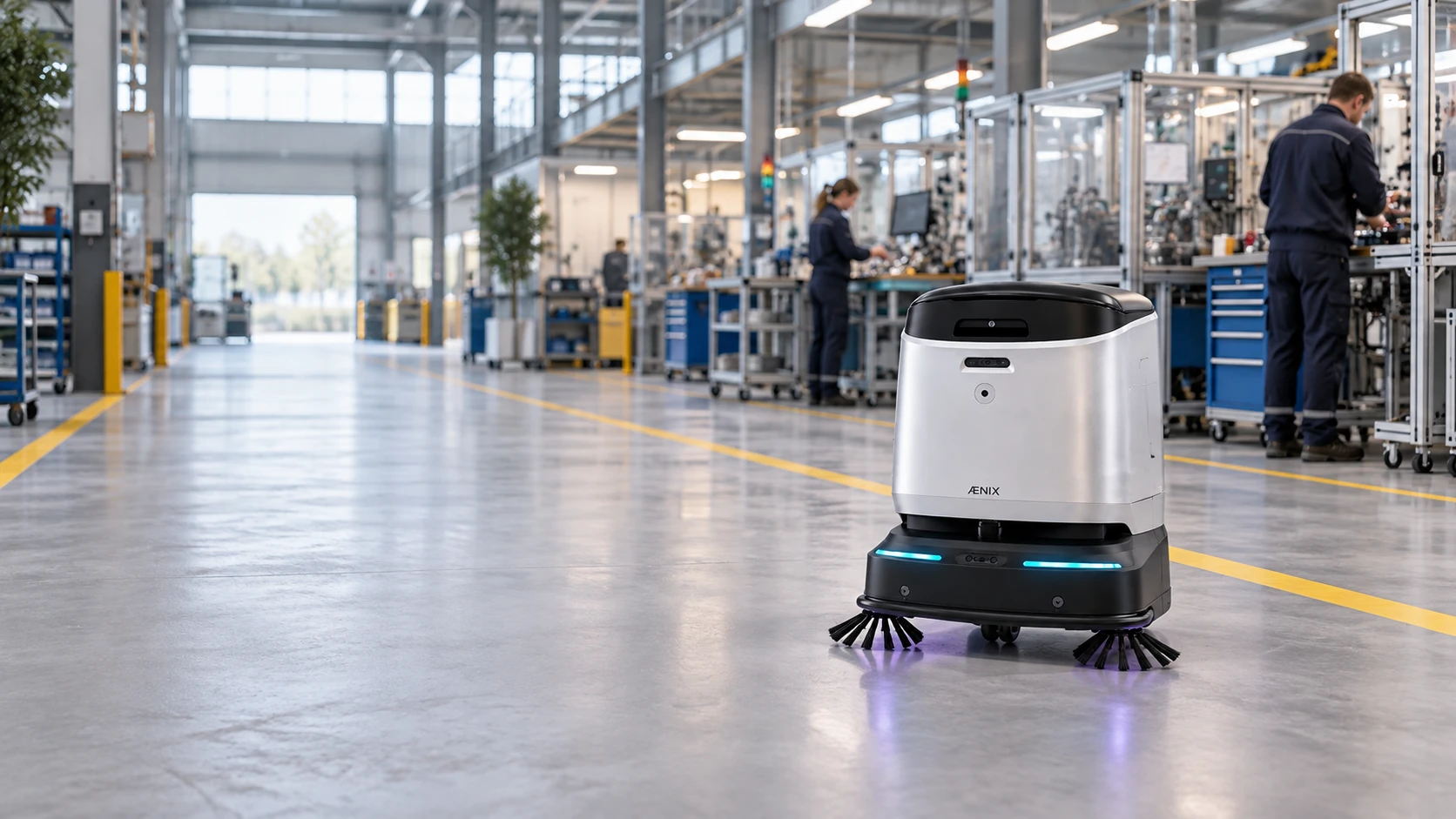
Robotics in the service of your industrial site.
Floor cleaning and internal transport: automate certain repetitive tasks with solutions assessed for your floors, your flows and your production constraints.
Operations
Organised production. Tasks that repeat.
Around the workstations, certain tasks come back every day: keeping circulation routes clean, moving loads from one point to another, working around production hours. Those are the tasks the assessment looks at.
This page covers workshops, production and internal flows. For the upkeep of large warehouse and logistics platform floors, see Warehousing & logistics.
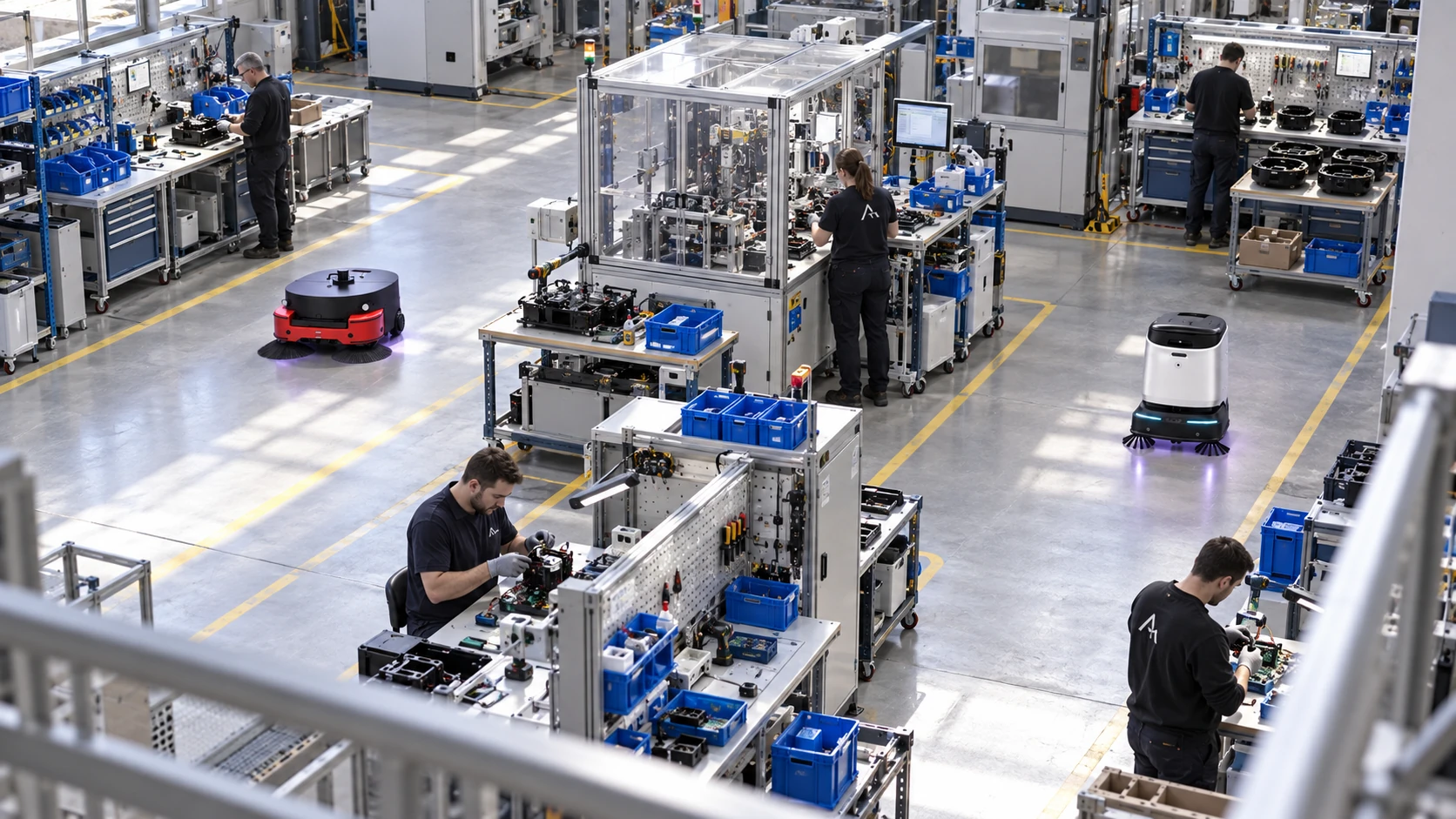
Keeping circulation routes clean
Floors to maintain according to their use, their condition and the site’s constraints.
Moving loads
Recurring internal runs between identified pick-up and drop-off points.
Working around the flows
Operators, mobile equipment and work areas sharing the same space.
Scheduling the work
Tasks to organise around hours, access and periods of activity.
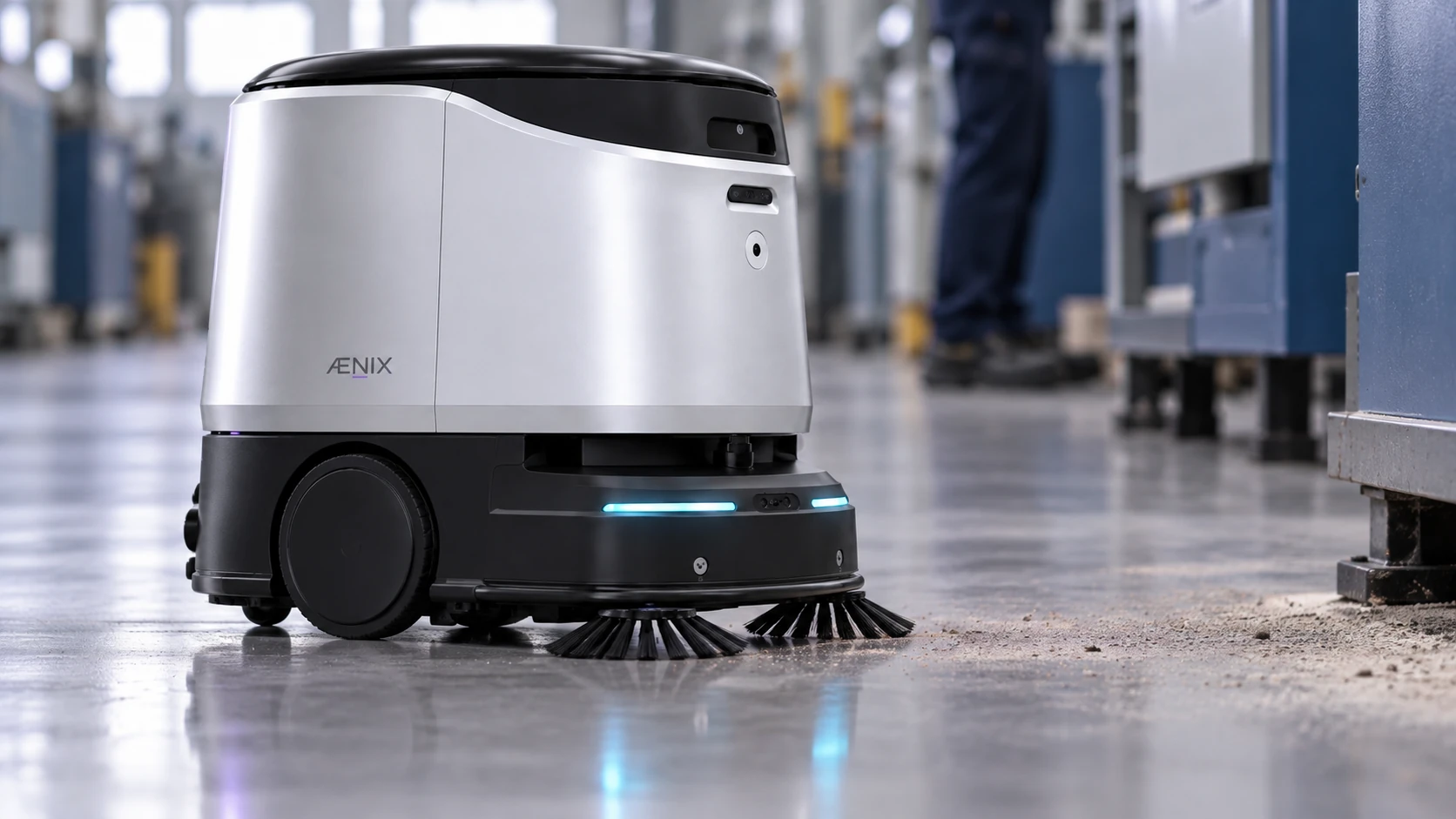
Industrial cleaning
Automating the upkeep of suitable floors.
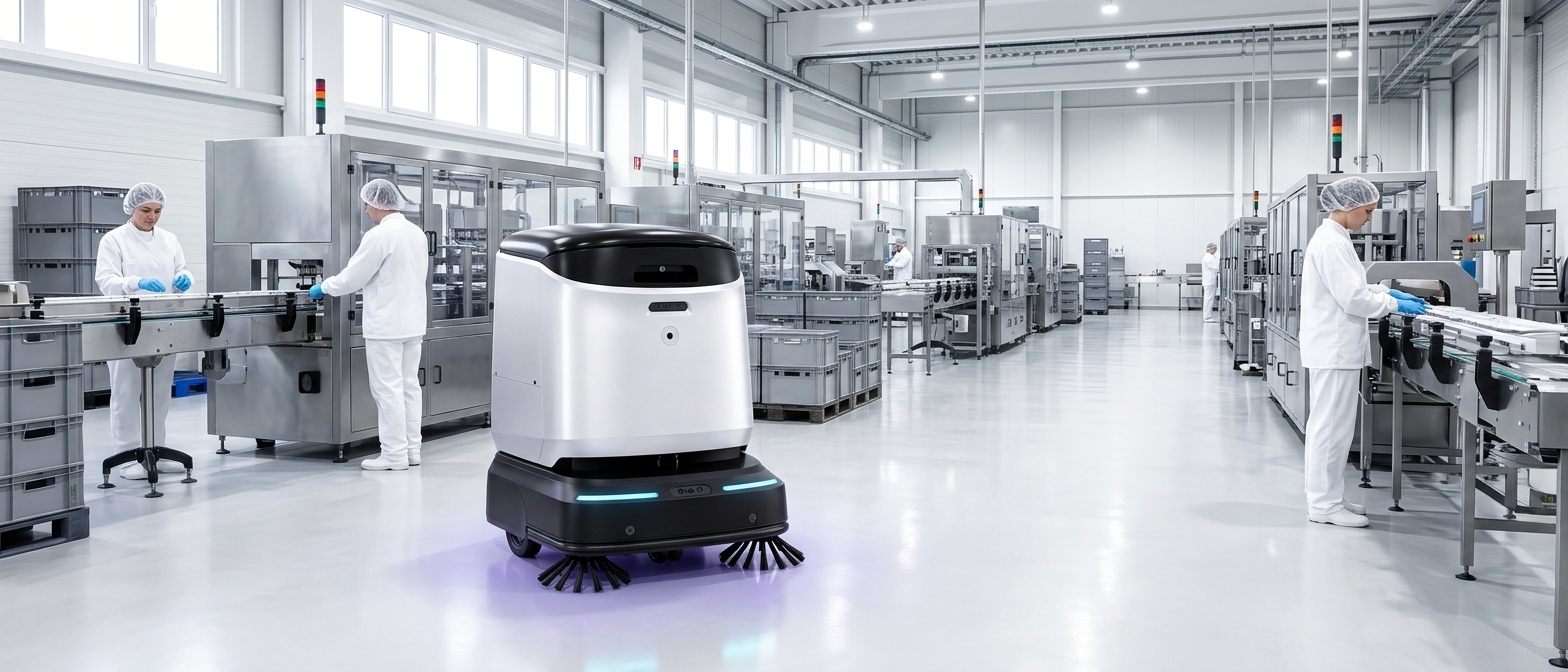
At a production site, cleaning is not just about floor area: it depends on the floor, the soiling and what the chosen machine can genuinely handle. It is a use that is qualified on the ground.
What we look at
- Type and condition of the floor
- Clear floors
- Clearance widths
- Types of soiling
- Upkeep frequency
- Accessible areas
- Production constraints
- The set-up you have today
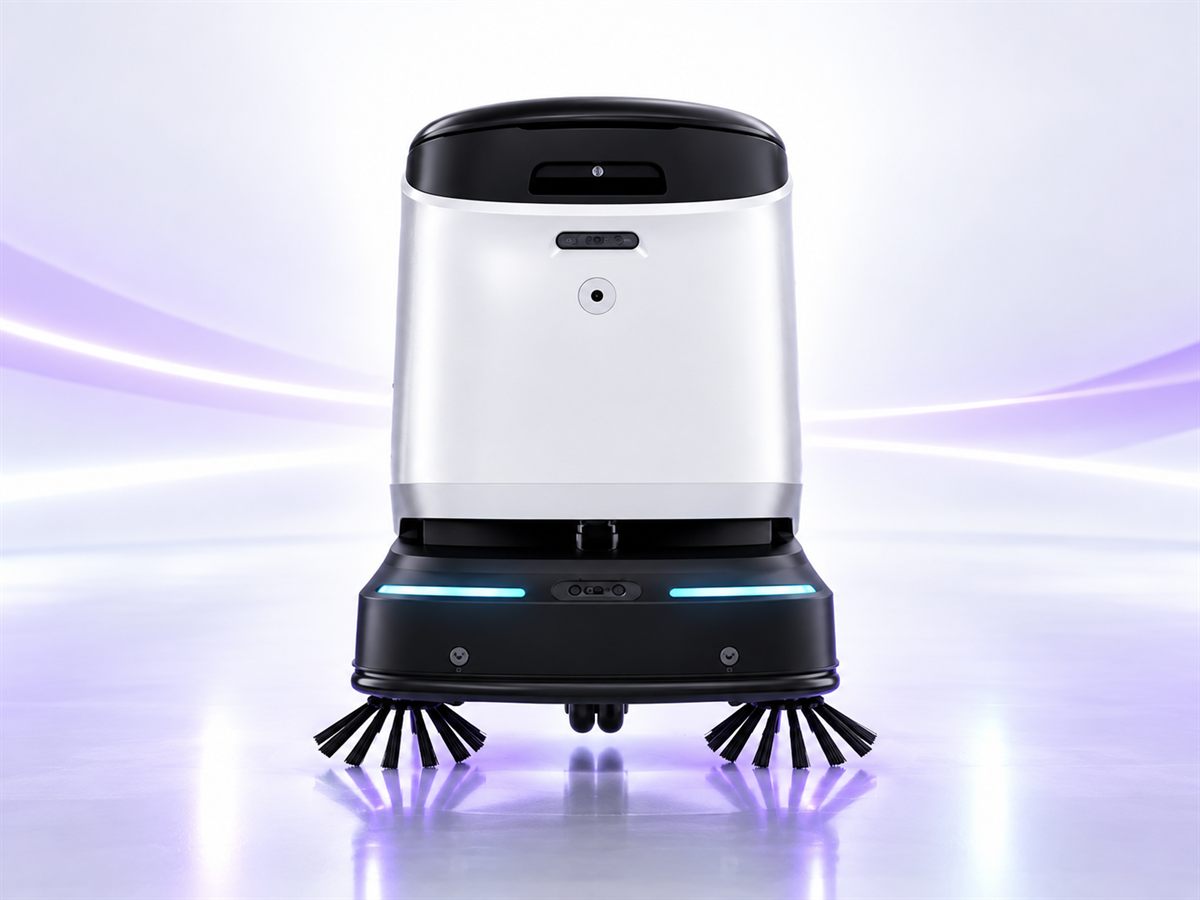
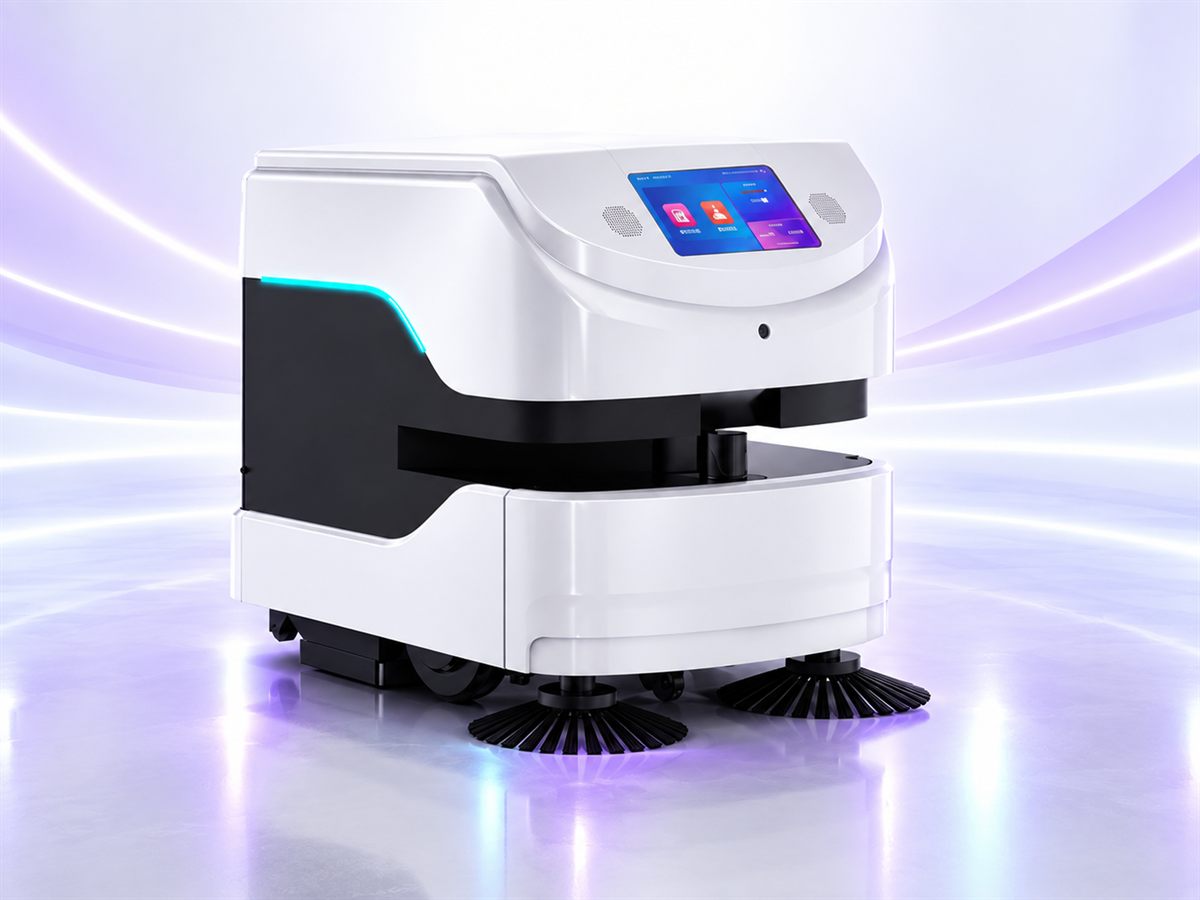
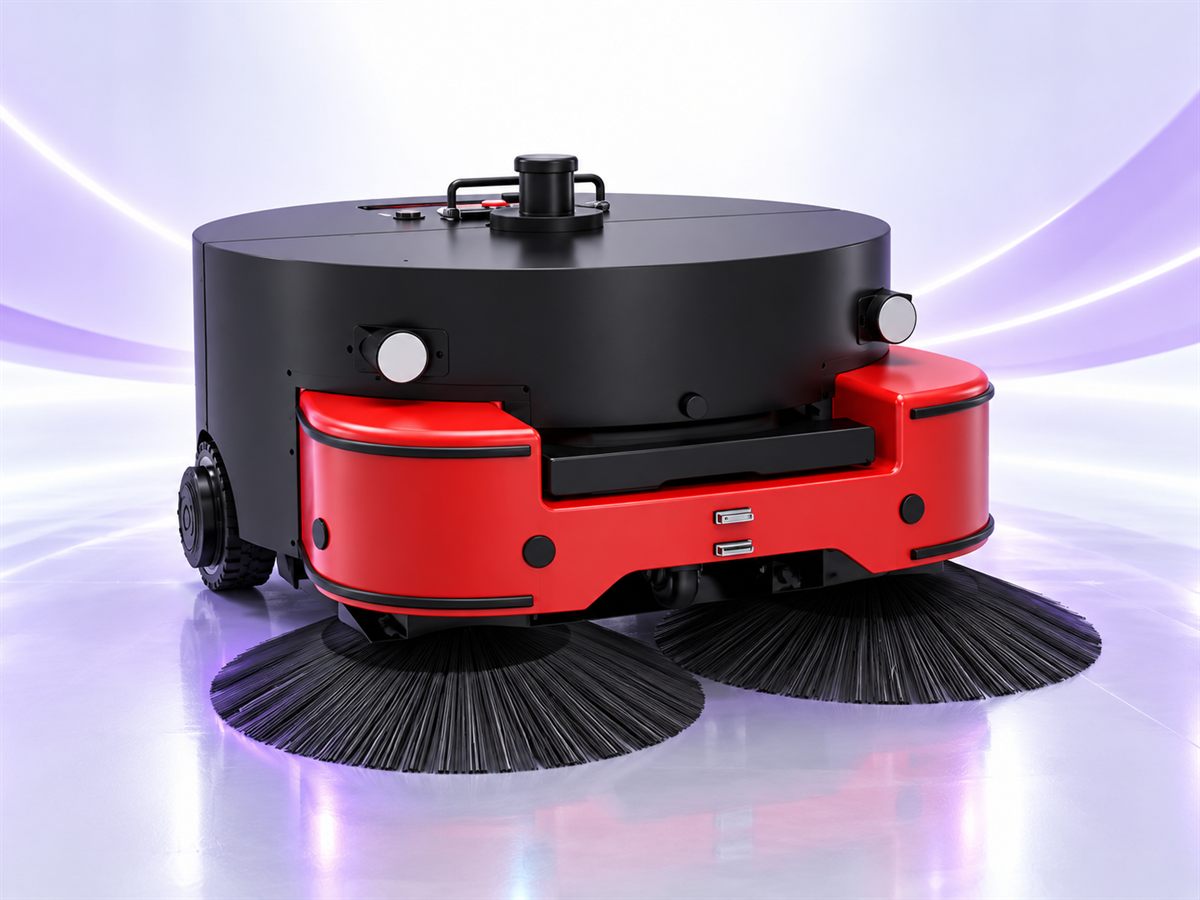
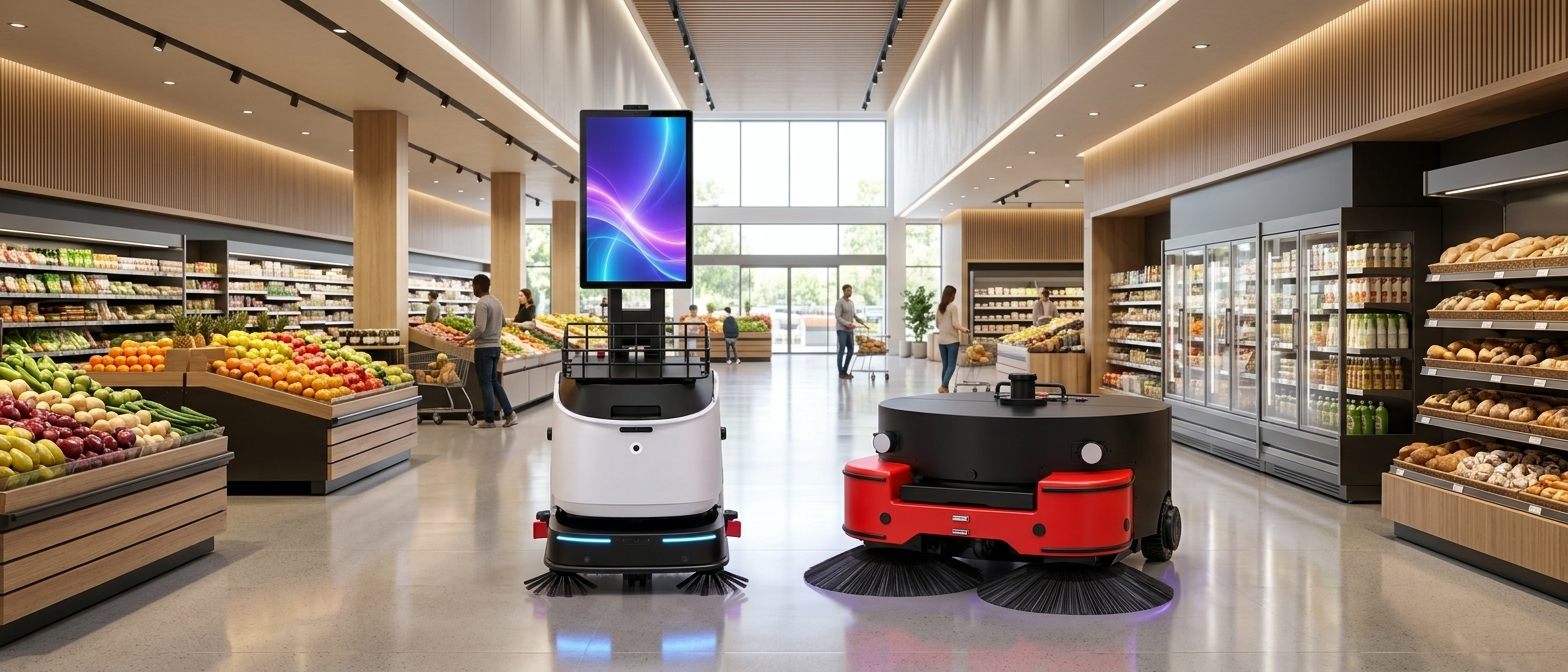
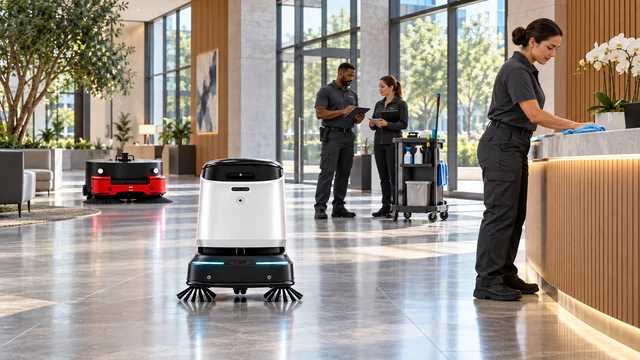
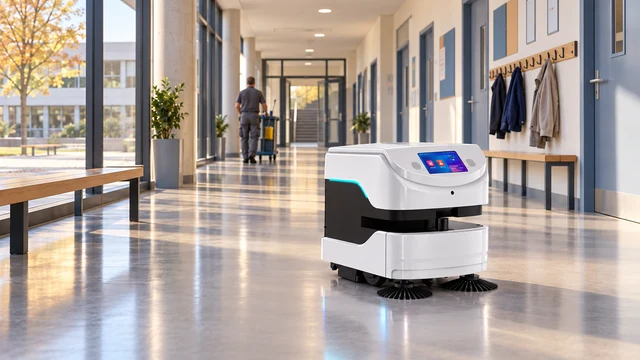
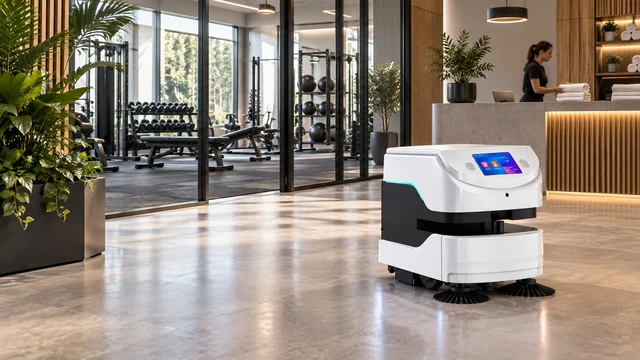
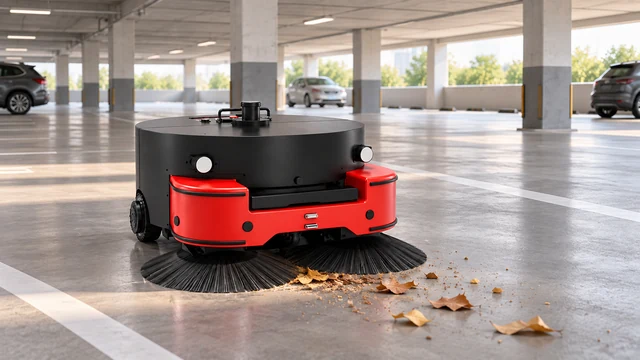
Depending on the tasks identified, the assessment may settle on ÆNIX PURE SWEEP for dry sweeping of dust and debris — 890 mm working width, 30 L hopper — or ÆNIX PURE ONE, which combines sweeping, scrubbing, vacuuming and dust handling.
What we do not claim: no compatibility with every floor, no vacuuming of hazardous dust, no handling of flammable liquids, no picking up of metal swarf, no removal of oils or chemicals, and no suitability for explosive atmospheres. Those uses would require specific documentation.
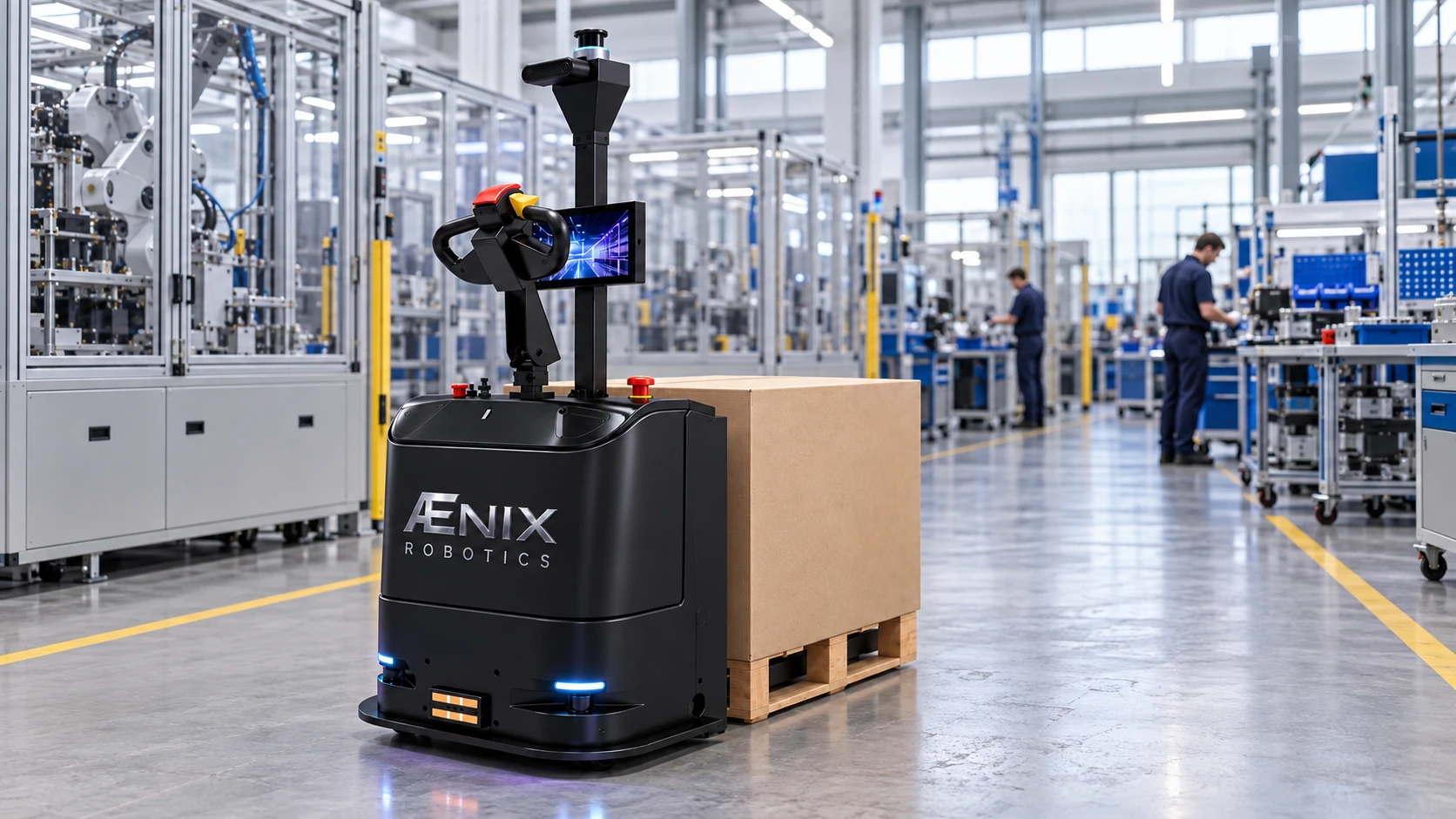
Internal transport
Looking at the runs that come back every day.
Moving components, shifting supplies, linking a preparation area to a workstation: these needs look alike from one site to the next, but the conditions for carrying them out never do.
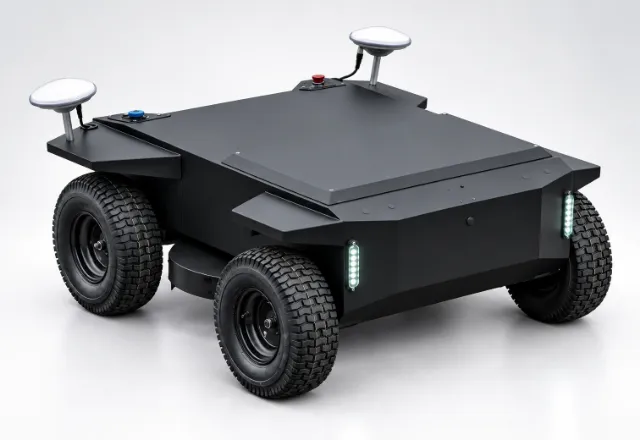
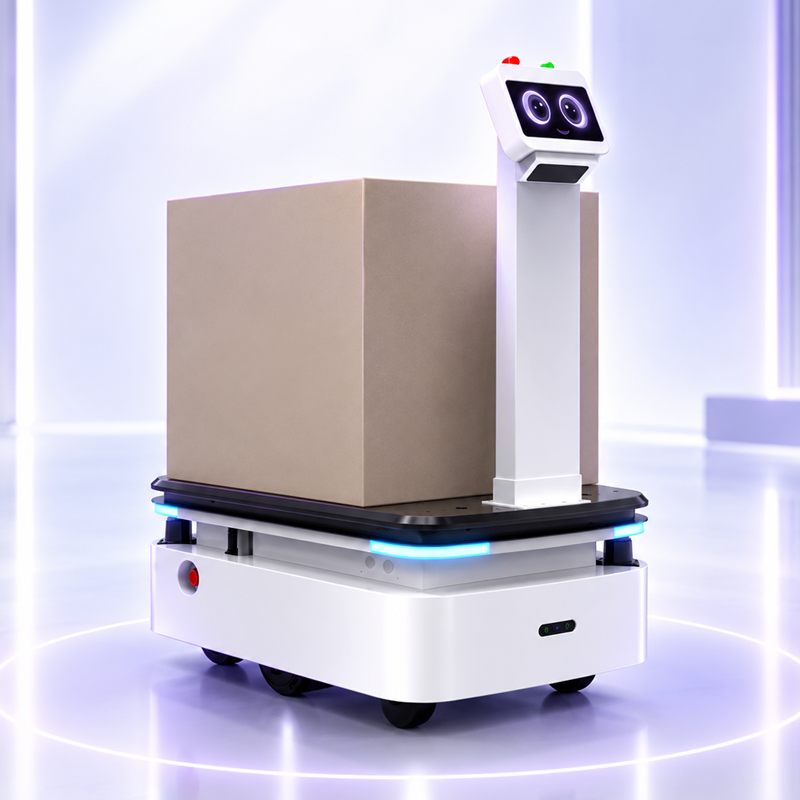
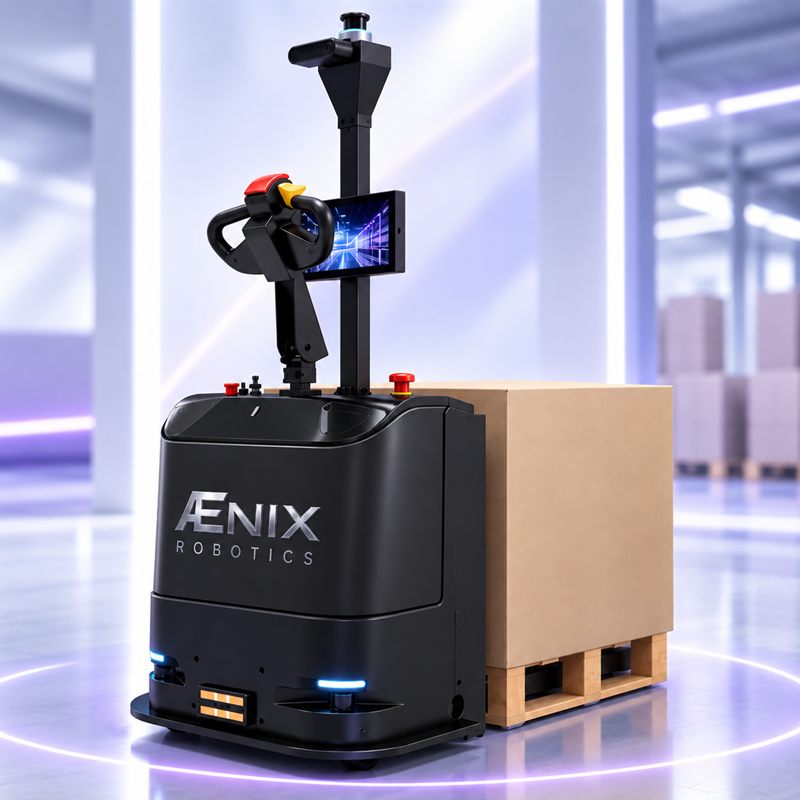
ÆNIX TITAN is the range’s transport solution for industrial environments, currently being added to the catalogue. Its specifications — load, pick-up and drop-off method, dimensions — are presented during the assessment of your project, not inferred from a photograph.
Constraints on the ground
The right route starts from the constraints on the ground.
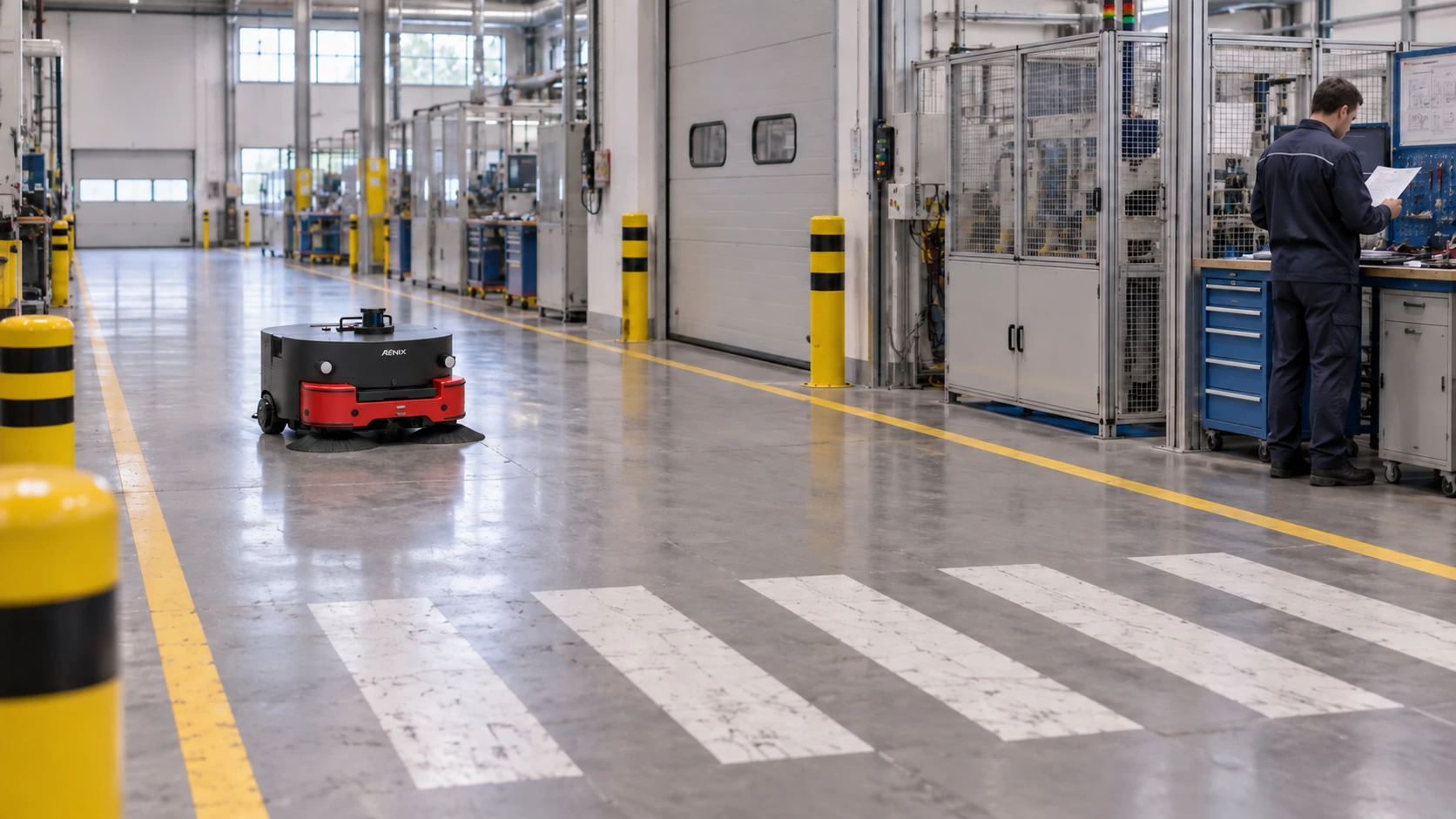
Four groups of criteria determine what a robot can do at your site — and what it cannot.
Floors and clearances
Coverings, thresholds, slopes, widths and obstacles along the route.
Movement
Pedestrians, vehicles, crossings and areas shared with production.
Environment
Dust, humidity, temperature and any particular conditions to qualify.
Organisation
Hours, access, service points and team responsibilities.
These criteria are inputs to the assessment: no threshold value is stated in advance, and no movement is presented as safe in all circumstances.
The teams
A solution that finds its place in the way teams work.
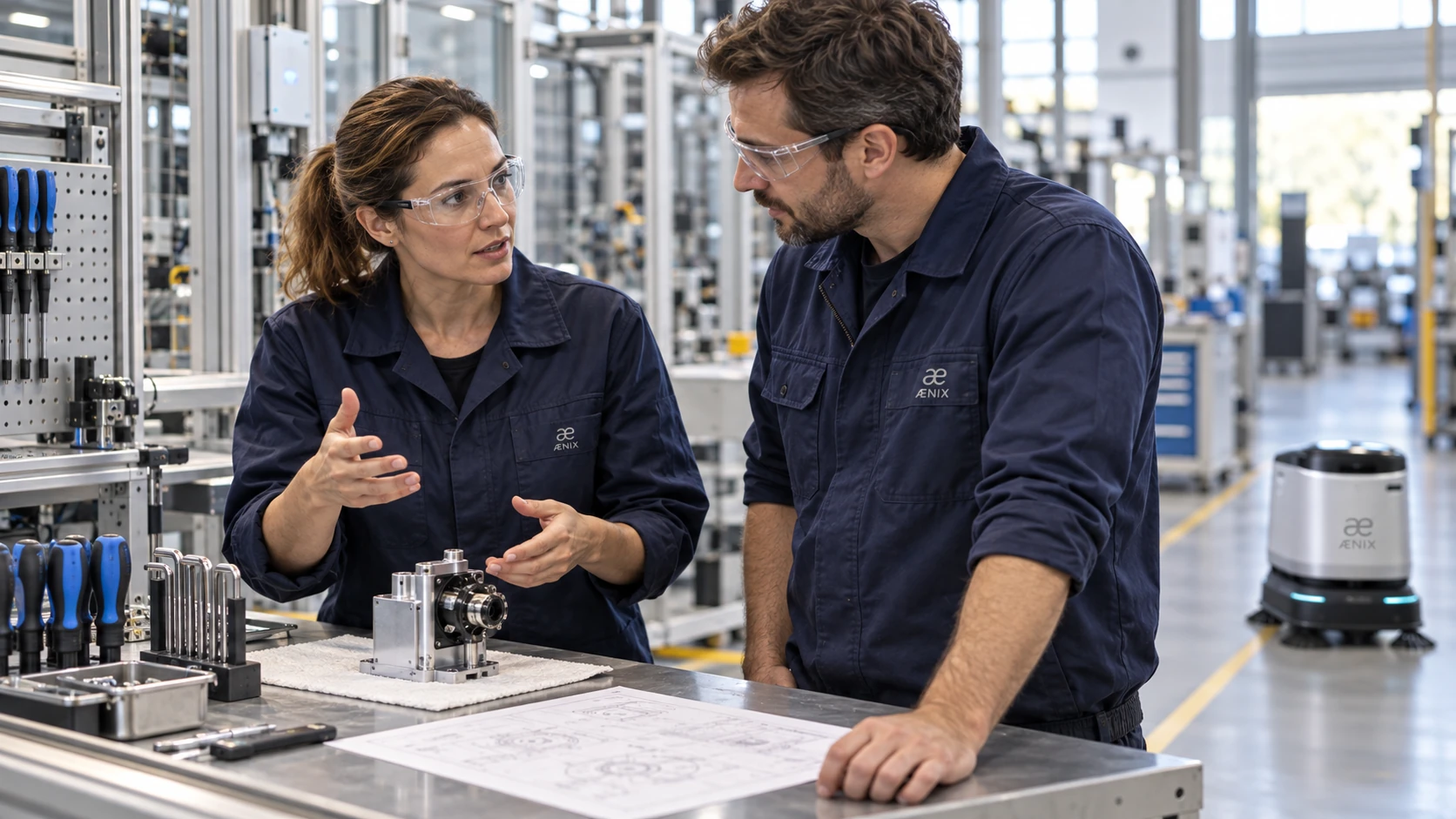
A robot does not run by itself in a corner of the workshop. Its use is prepared, shared and maintained: that is the difference between a machine in use and a machine put away.
The ÆNIX method
Start from your site. Build a solution that fits.
ÆNIX Robotics is an integrator: the machine comes after the analysis, never before.
Analysis
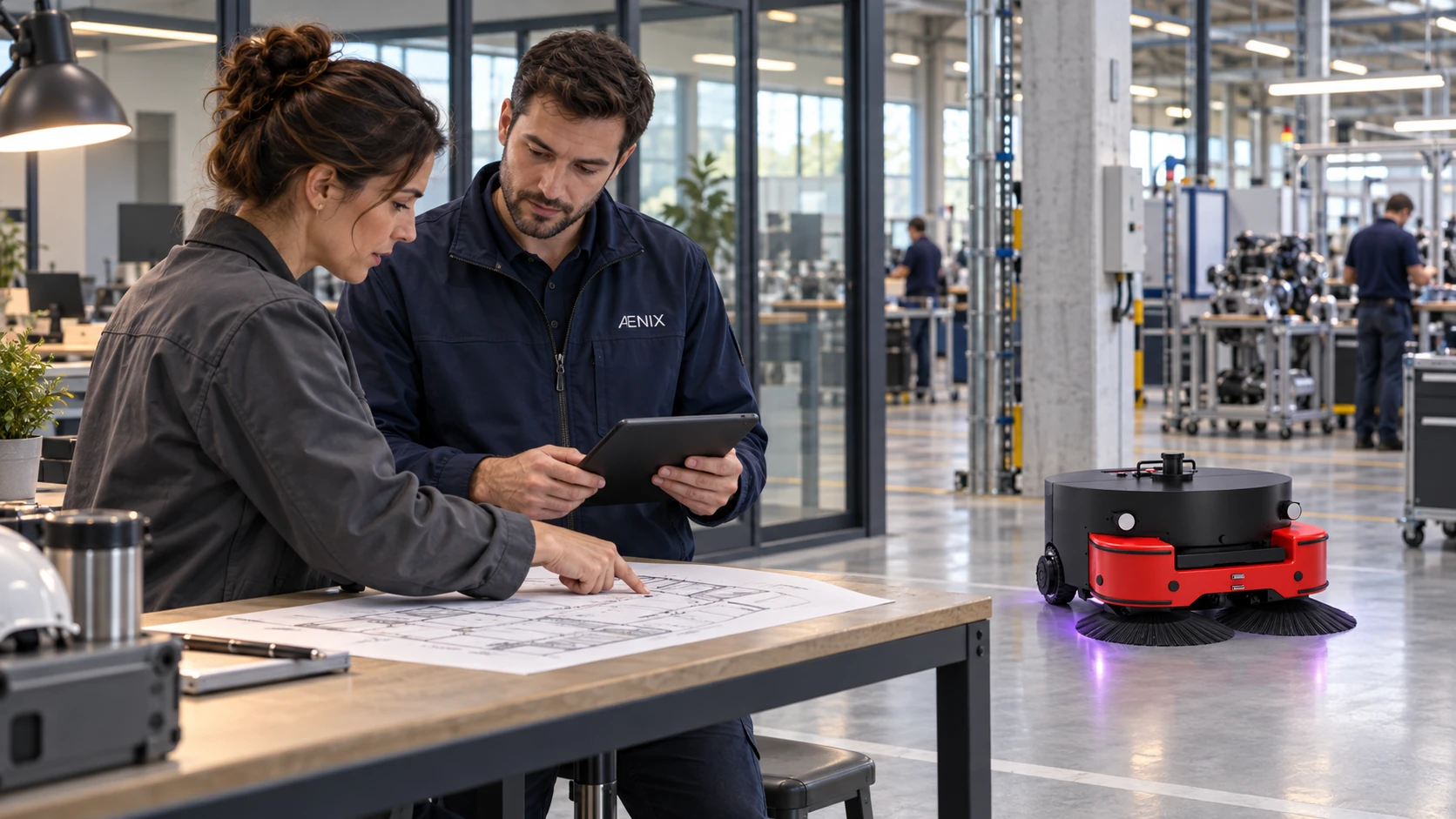
Plans, floor areas, flows, tasks, any loads and operating constraints.
Select
Identifying the relevant solutions from their documented capabilities — or finding that none fits.
Trial and deploy
Arranging a trial where it makes sense, defining the scope, then setting up the chosen solution.
Train and support
Training the teams and setting out the support arrangements according to the offer.
Financial assessment
Evaluating one concrete use before widening the rollout.
A financial assessment needs your data: without it, any figure would be invented. We start from one specific task and what it represents today.
The assessment may conclude that a task is not suited to automation, or that the site has to be adapted first.
Deployment
A first scope to prepare what comes next.
Starting small is not a lack of ambition: it is the surest way to check that a use holds up over time before extending it.
Moving to several robots or several sites is never automatic: every extension gets its own assessment. No fleet orchestration and no connection to an ERP, MES or WMS is claimed on this page.
Financing
Let’s talk about how to acquire it.
Different purchase or financing arrangements can be explored depending on the project, the number of machines and the period envisaged. The terms are presented with the proposal, after the site assessment.
Discuss it with an expertWhich cleaning robot should an industrial site choose?
It depends on the task and on the floor. ÆNIX PURE SWEEP is a dry sweeping robot designed for large industrial and logistics floors: 890 mm working width, 30 L hopper. ÆNIX PURE ONE combines sweeping, scrubbing, vacuuming and dust handling. The choice is made after examining your floors, your clearances and your soiling.
Which floors and which soiling can be handled?
That is qualified on site, covering by covering. We present no machine as compatible with every floor. In particular, oils, metal swarf, hazardous dust, flammable liquids and explosive atmospheres are not covered by the uses described here: they would require specific documentation.
Can a robot be used while the workshop is running?
Depending on the areas, the hours and the traffic. The assessment defines the spaces given to the robot, the working windows and the excluded areas. Some tasks suit quiet periods, others can fit into the activity: it depends on your organisation, not on a general rule.
Which internal transport tasks can be assessed?
Repetitive, identified runs: moving components, shifting supplies, transferring bins or suitable containers between defined points. These needs are assessed case by case; they are not a promise of compatibility for any given robot.
How do you choose a solution according to the loads to be moved?
The assessment covers the nature of the load, its container, its stability, its frequency, the distance, the pick-up and drop-off method, and the interactions with people. Only then is a solution proposed, based on its documented capabilities.
How do you prepare for sharing space with operators and vehicles?
By starting from the ground: widths, crossings, shared areas, markings and traffic habits. Routes, time slots and excluded areas are defined with your teams, and everyone’s role is set out before commissioning.
Do circulation routes or pick-up and drop-off points need changing?
Sometimes, yes. Clearing space, marking out, a stable location or a dedicated service point may be needed. Any such changes are identified during the assessment, before any commitment, so they are not discovered after delivery.
Can a solution be trialled before deployment?
Where it is worthwhile and possible, a trial can be arranged, subject to the site’s eligibility and the availability of the solution. Tell us about the task you have in mind to set the terms.
What determines the cost of the project?
The solution chosen and the number of machines, the configuration, the deployment, the associated services (training, support, maintenance), the consumables, any site changes and how it is acquired or financed. ÆNIX draws up a proposal after the assessment. Request a quote
Can the rollout be extended progressively?
That is the approach we recommend: a first scope, observations, an adjustment, then an extension when conditions allow. Every new area or new site gets its own assessment.
Site assessment
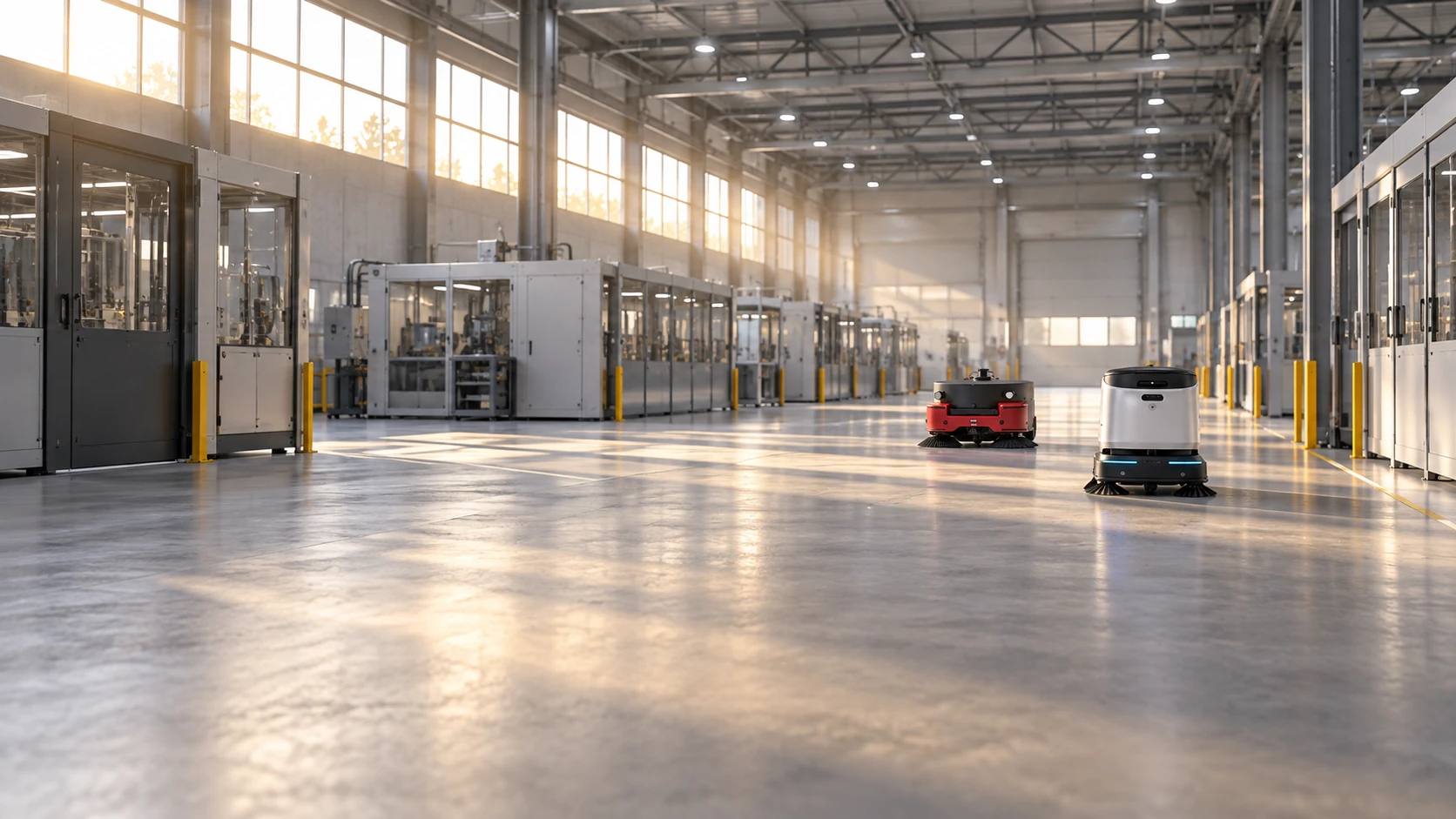
Let’s identify the tasks your site can automate.
Tell us about your floors, your flows and your organisation. ÆNIX assesses the relevant uses and the conditions needed to put them in place.
- Phone
- +33 5 33 04 12 27
- contact@aenix.fr