

OfficesOn-site assessment

Robotic cleaning for your offices and workplaces

Lobbies, corridors, meeting areas: offices combine spaces with very different occupancy patterns. ÆNIX assesses the tasks that can be handed to a robot and where they fit in your cleaning organisation.

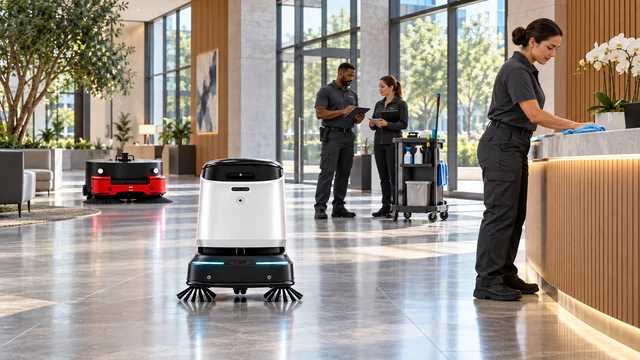
PURE QUIET robot in an office corridor lined with glass-walled meeting rooms
Illustration only. The robot shown is a PURE QUIET. This image does not show a client site or identified employees.

The spaces

Spaces with different uses.

A single building contains areas that are not cleaned in the same way or at the same time. The assessment examines them one by one.

Points to examine, area by area. No area is treated as compatible by default: observing the site is what decides it.
AreaWhat characterises itWhat the assessment looks at
Lobbies and corridorsLarge circulation areas, very busy when people arrive and leave.The floor covering, the width of the passages, the doors and the busiest hours.
Meeting roomsChairs and tables moved from one meeting to the next, varying bookings.Clutter on the floor, whether chairs can be moved out of the way, and time slots with no bookings.
WorkspacesDesks, pedestals, cables and personal belongings, with sometimes irregular occupancy.Cables and objects on the floor, the passages between desks and the areas to exclude.
Break areasDense furniture and possible spills near water points or food areas.The type of dirt, the floor covering and what calls for manual cleaning.

Routes

Define the routes that are genuinely accessible.

What the floor plan shows is not enough: a robot only moves where the floor is clear at the time it passes.

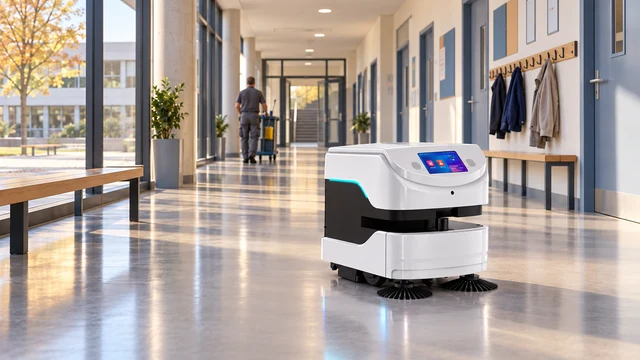
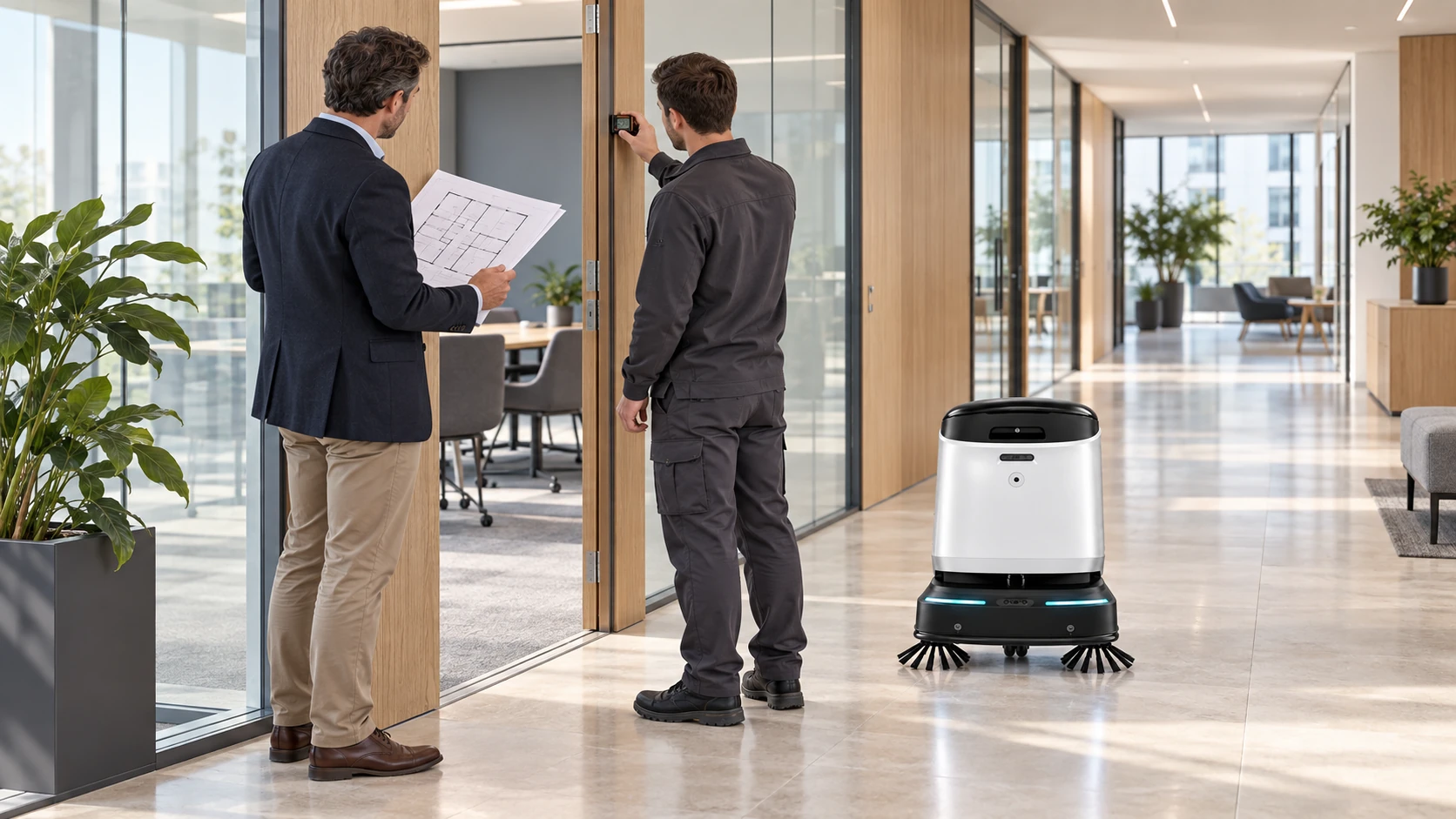
Checking a building’s doorways and plan before a robotic cleaning project
Illustration only. Recording clearances before a project; the robot shown is a PURE ONE. This scene does not document an assessment carried out for a client.

What we record on site

  • Chairs and furniture moved during the day
  • Cables, power strips and objects left on the floor
  • Doors, gates and access controls
  • Transitions between floor coverings and small thresholds
  • Areas to exclude: plant rooms, archives, sensitive spaces

This survey leads to a defined scope: the areas where regular passes could be considered, and those that continue to be cleaned by hand.

The site readiness checklist

The hours

Choose the operating windows.

The right time slot depends on how your spaces are actually used, not on a standard timetable.

  1. Before staff arriveSpaces that are often empty

    To examine: building opening times, the alarm and access for the people who start the robot.

  2. During office hoursVarying occupancy

    To examine: how busy the corridors are, the acceptable disturbance near workstations and visitor traffic.

  3. Between meetingsRooms that are free from time to time

    To examine: bookings and whether the floor can be cleared before the pass.

  4. After staff leaveClearer areas

    To examine: other contractors on site, building security and where the robot charges.

What about noise?

Acceptable disturbance varies from one space to another. We do not publish a noise level here: it is judged in your premises, during a demonstration where one is possible, before a time slot with staff present is chosen.

The team

Plan the tasks that stay with the team.

The robot maintains clear floors within a defined scope. The rest of the service is still carried out by your cleaning staff.

What a robot can take on

  • Regular passes on the selected corridors
  • Routine care of compatible floors, according to the model’s functions
  • Repeated routes at agreed time slots

What stays with the team

  • Preparing the areas: chairs, objects left on the floor
  • Desks, furniture and high surfaces
  • Washrooms and touch points
  • Finishing work, edges and corners
  • Checking the result
  • Routine care of the machine, according to its manual

The robot does not clean desks, furniture or washrooms. Moving from one floor to another is not presented as automatic: it is organised during the assessment.

One option to consider

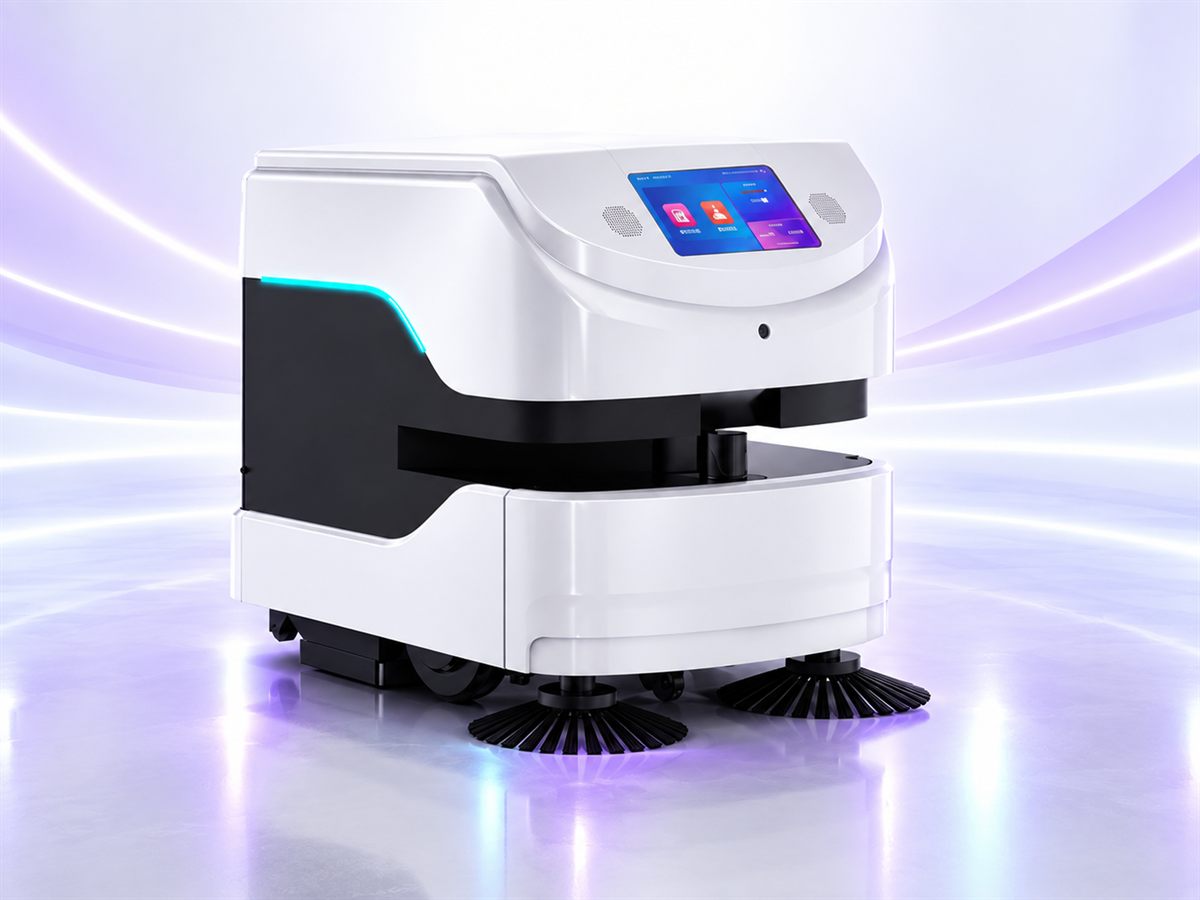
PURE QUIET, designed for office and workplace spaces.

Its product sheet describes it for the daily upkeep of office and retail spaces. Whether it suits your offices is checked on your floors and at your hours.

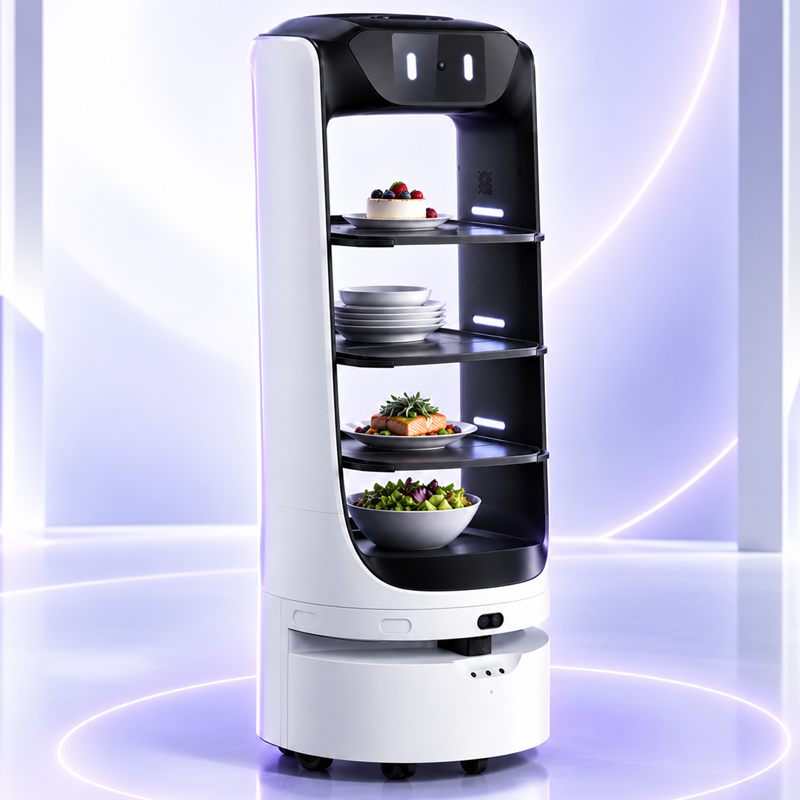
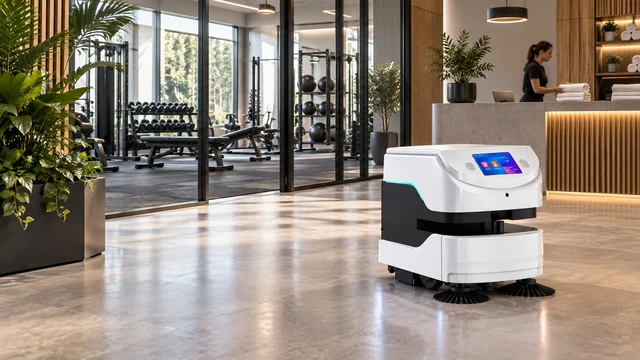
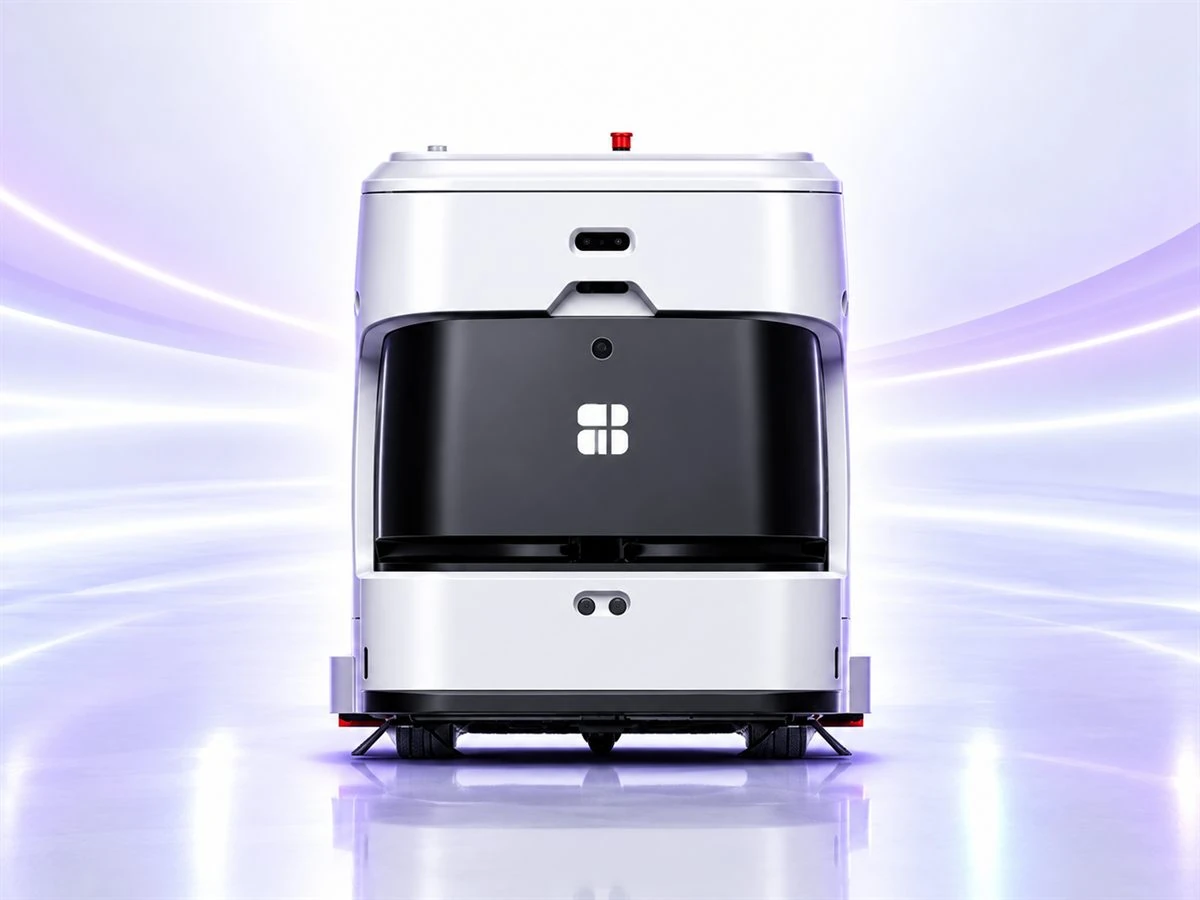
View of the ÆNIX PURE QUIET robot

ÆNIX PURE QUIET

An autonomous cleaning robot intended for light to medium daily upkeep of places that are occupied for much of the day.

Intended use
Daily upkeep of office and retail spaces
Documented functions
Sweeping, scrubbing, vacuuming, wet washing
Floor coverings listed
Hard floors and short-pile carpet, to be checked on your floors
Outside intended use
Industrial environments

Information taken from the ÆNIX product sheet. Depending on the size of your corridors and the tasks in view, other models in the range can also be assessed.

Getting started

Start with a defined scope.

A limited first scope lets you observe the machine in your spaces before going further.

01

The assessment

Visiting the spaces, recording the floors, clearances and schedules.

02

Choosing an area

A representative area, clear at the planned time slots.

03

The demonstration

Where possible, in the selected area and subject to feasibility.

04

Observations

What the machine does, what remains manual, what occupants say.

05

Adjustments

Routes, schedules or scope, before any decision to extend.

Frequently asked questions

What we are asked about offices.

Another question? Write to us.

Can the robot run while the offices are occupied?

It depends on the areas, how busy they are and the disturbance your teams find acceptable. Some time slots may be suitable and others not: the assessment and, where possible, a demonstration in your premises let you judge. No absence of disturbance is guaranteed.

Which floors need checking?

All those within the planned scope: the type of floor covering, its condition, joints, thresholds and transitions between floors. The floor manufacturer’s recommendations matter too. Carpet or wooden flooring are not treated as compatible by default.

How are several floors handled?

Each floor is assessed as a separate area. Moving from one floor to another — by lift, by stairs or carried by a person — is not presented as automatic: it is organised with you during the assessment.

Which tasks stay with the cleaning staff?

Preparing the areas, desks and furniture, washrooms, touch points, finishing work, checking the result and routine care of the machine according to its manual. The robot complements the organisation; it does not replace it.

How are the times chosen?

Based on actual occupancy: arrivals and departures, room bookings, other contractors on site, building access and security. The time slots are then adjusted after the first observations.

Assessing your offices

Let’s talk about your offices.

Describe your floor areas, floors and how the premises are used. We assess the areas and tasks that could be handed to a robot, and on what conditions.

  • Floor areas
  • Number of floors
  • Floor types
  • Occupancy hours
  • Constraints

The assessment may conclude that some spaces are not suited to a robot: no compatibility is taken for granted.

Coverage
Across France